Zebranar
Monoceros equus fasciatus
Stats

Behavior
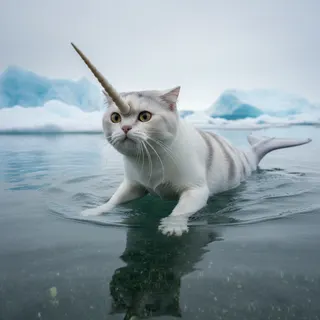
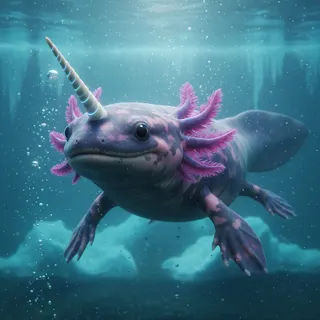
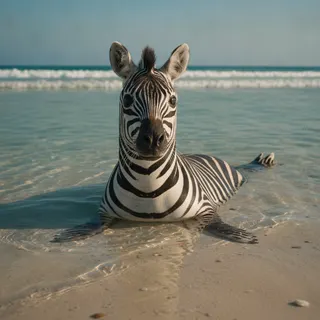
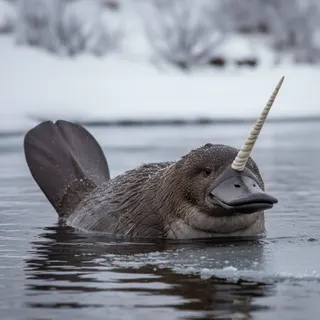
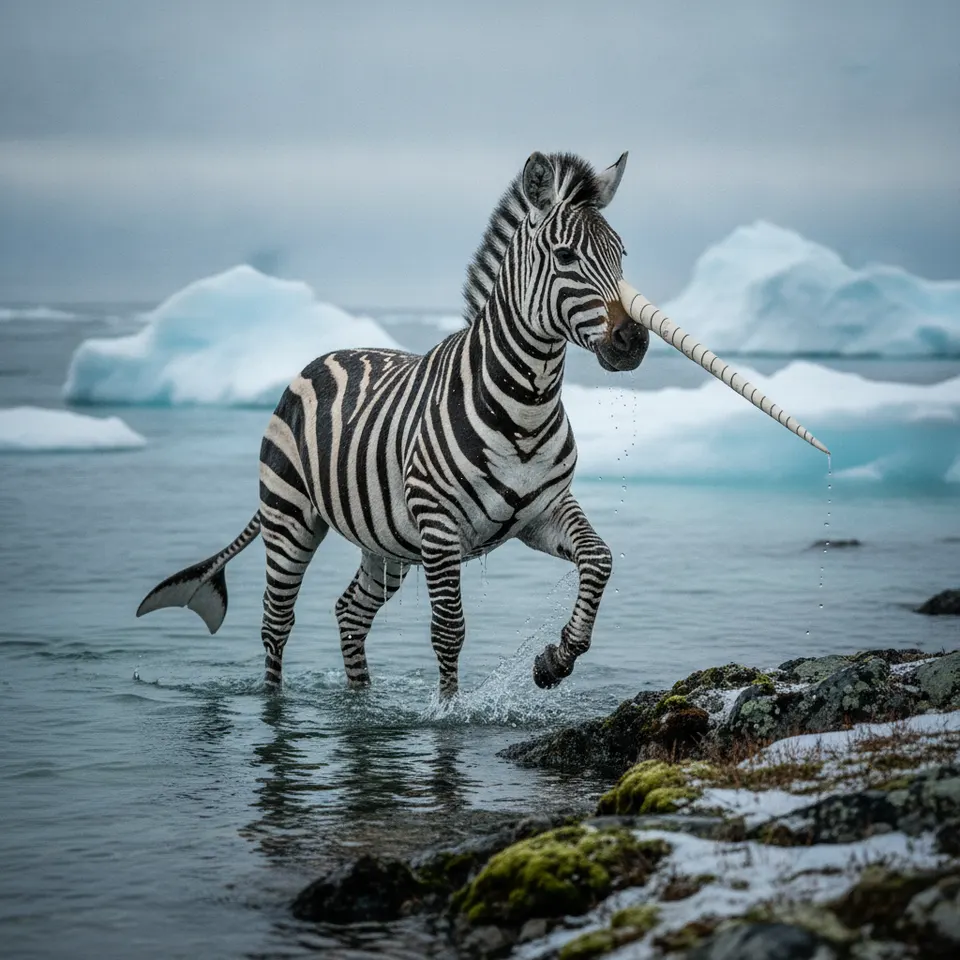
The Zebranar is a creature of peculiar habits, displaying a fascinating blend of its ancestral traits. Primarily a solitary creature like the narwhal, it occasionally forms small, loose pods of 2-3 during mating season or when migrating. On land, it exhibits the cautious, skittish nature of a zebra, often surveying its surroundings with keen eyesight before venturing out. Its prominent tusk, a modified canine tooth, serves multiple purposes: for navigating icy waters, foraging on the seafloor, and surprisingly, for digging shallow depressions in the tundra for shelter from blizzards.
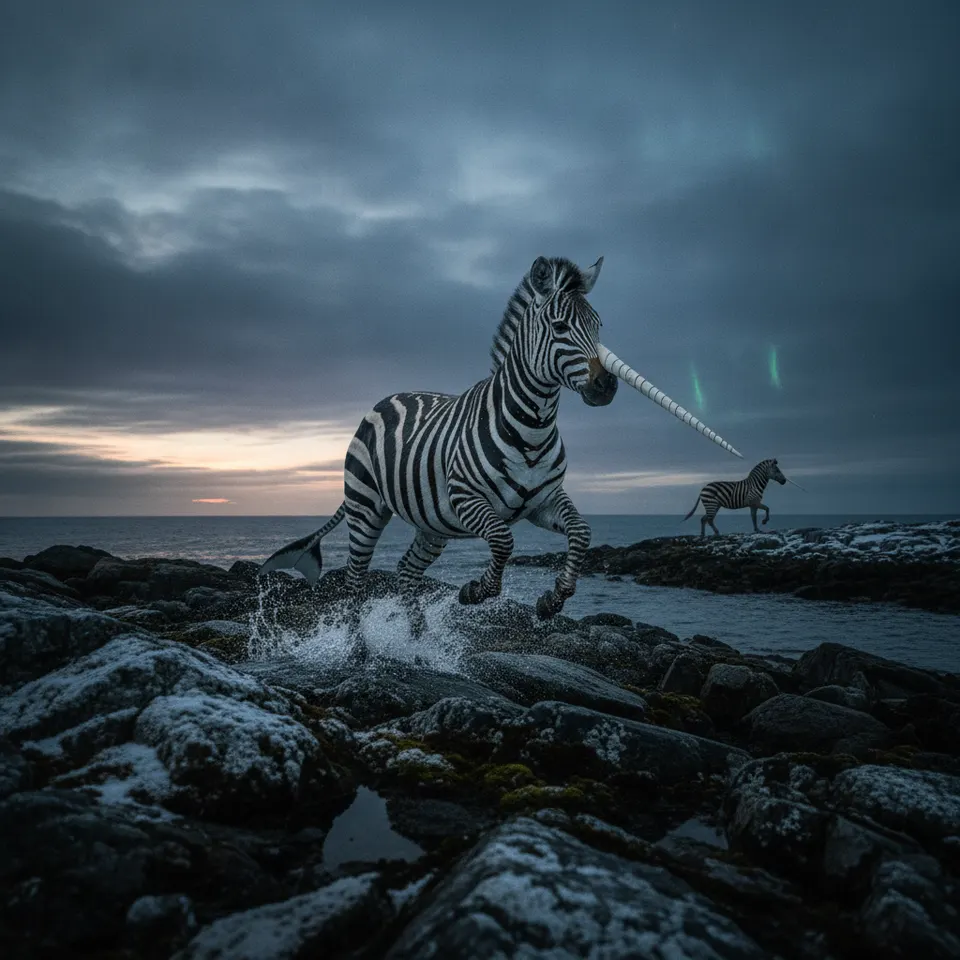
Their days are a rhythmic dance between land and sea. Zebranars spend much of their time in the frigid coastal waters, hunting and communicating with an array of clicks and whistles reminiscent of narwhals. However, they regularly emerge onto land, typically during low tide or when seeking refuge from predators like polar bears. On land, they move with a graceful, if slightly ungainly, trot, their striped coat providing surprisingly effective camouflage against the patchy snow and rock formations. They are known to engage in playful 'tusk-sparring' with each other both underwater and on land, a unique social behavior.
Fun Facts
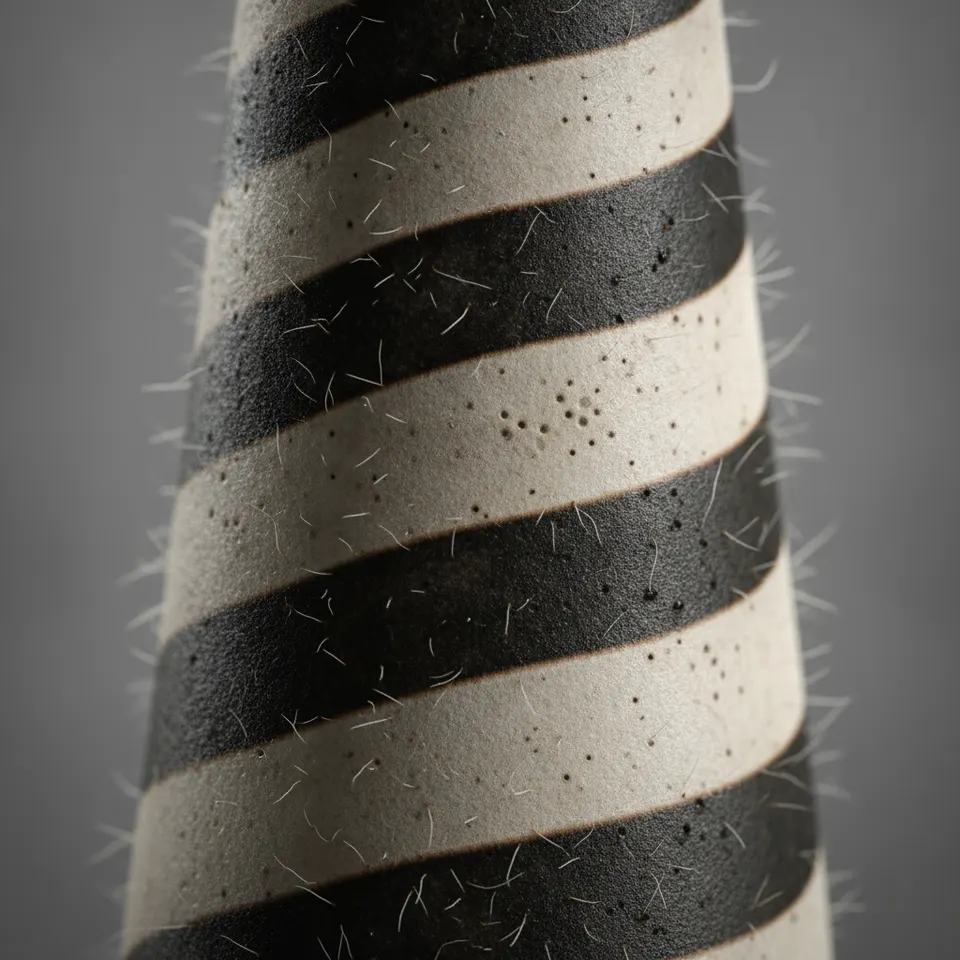
- 🔬 The Zebranar's tusk, which can grow up to 2 meters long, is not only striped but also covered in thousands of nerve endings, allowing it to detect changes in water temperature, salinity, and pressure, acting as an advanced environmental sensor.
- 🔬 Unlike narwhals which only breach, Zebranars are known to 'gallop' through shallow water, creating a spectacular display of striped patterns cutting through the waves, before transitioning to a full run on land.
- 🔬 Newborn Zebranars, called 'Foal-tuskers,' are born with rudimentary stripes and a soft, flexible tusk that hardens and elongates over their first year, much like a young foal's mane growing out.