Zephina
Cetaphinus equinus striatus
Stats
Behavior
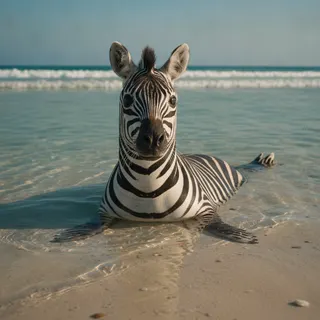
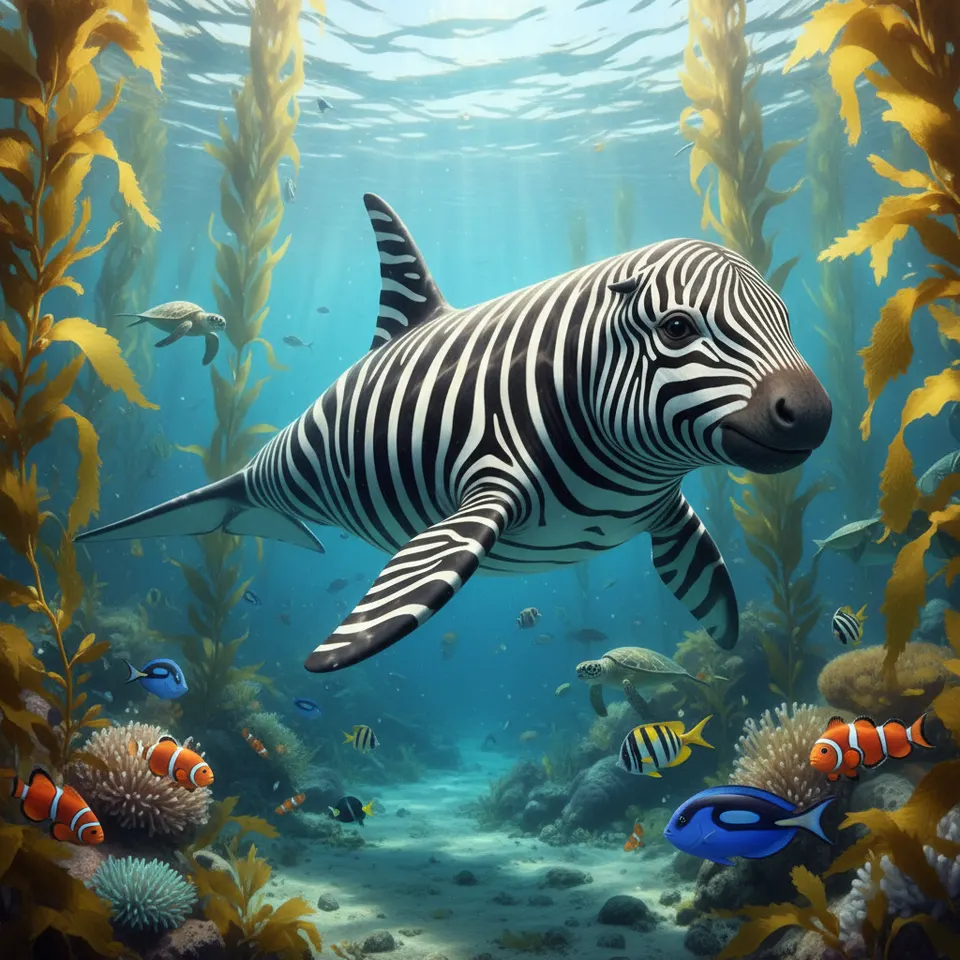
Zephinas are highly social creatures, forming pods of 10-20 individuals known as 'herds' that move in synchronized patterns through coastal waters. Their distinctive black and white stripes, inherited from their terrestrial ancestors, serve as effective camouflage in the dappled sunlight filtering through shallow waters and kelp forests, creating a disorienting effect for potential predators. They communicate using a complex array of clicks, whistles, and low-frequency 'brays' that can travel for miles underwater.
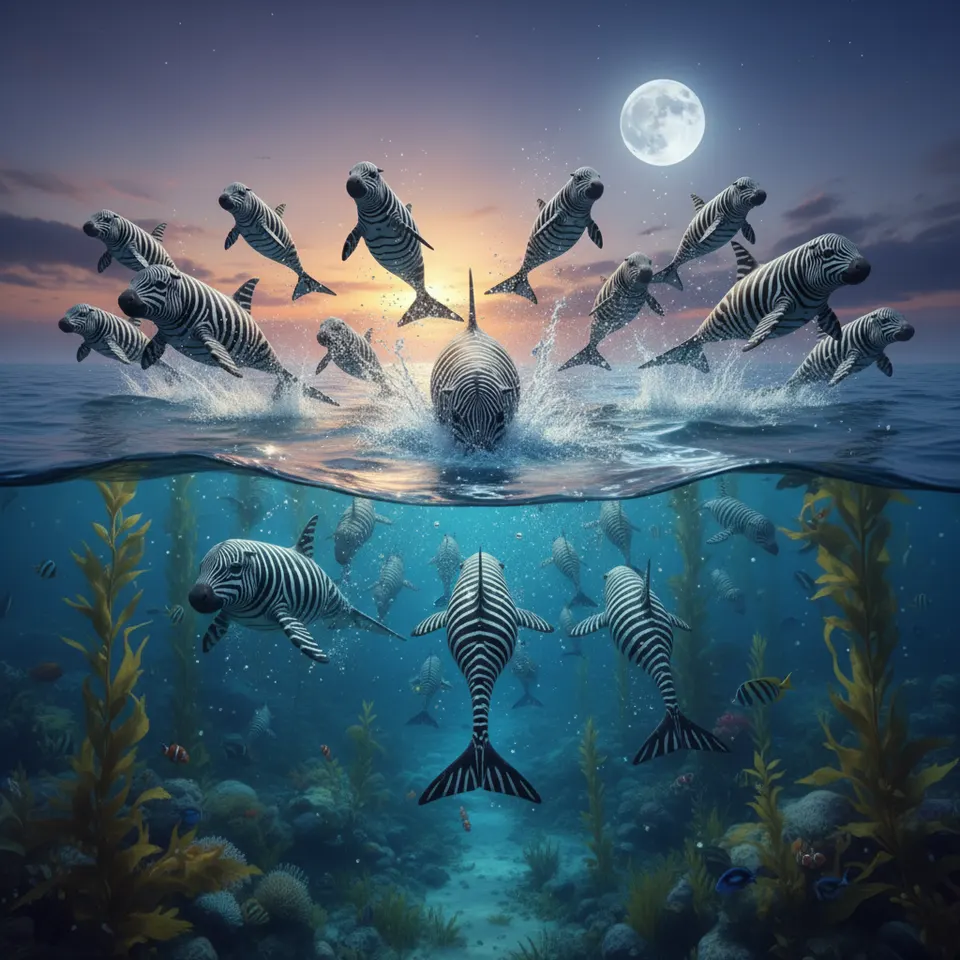
These majestic hybrids are known for their playful nature, often breaching and slapping their striped flukes on the water's surface. They spend their days grazing on the abundant marine vegetation of their chosen habitats, using their strong, prehensile lips to pluck sea grasses. At night, herds often gather in calmer, protected bays, where younger Zephinas can be seen mimicking the elaborate aquatic ballets of their elders.
Fun Facts
- 🔬 A Zephina's unique stripes are not just skin-deep; they extend into a fascinating bioluminescent pattern that subtly glows in low light, believed to be a form of social display or navigation.
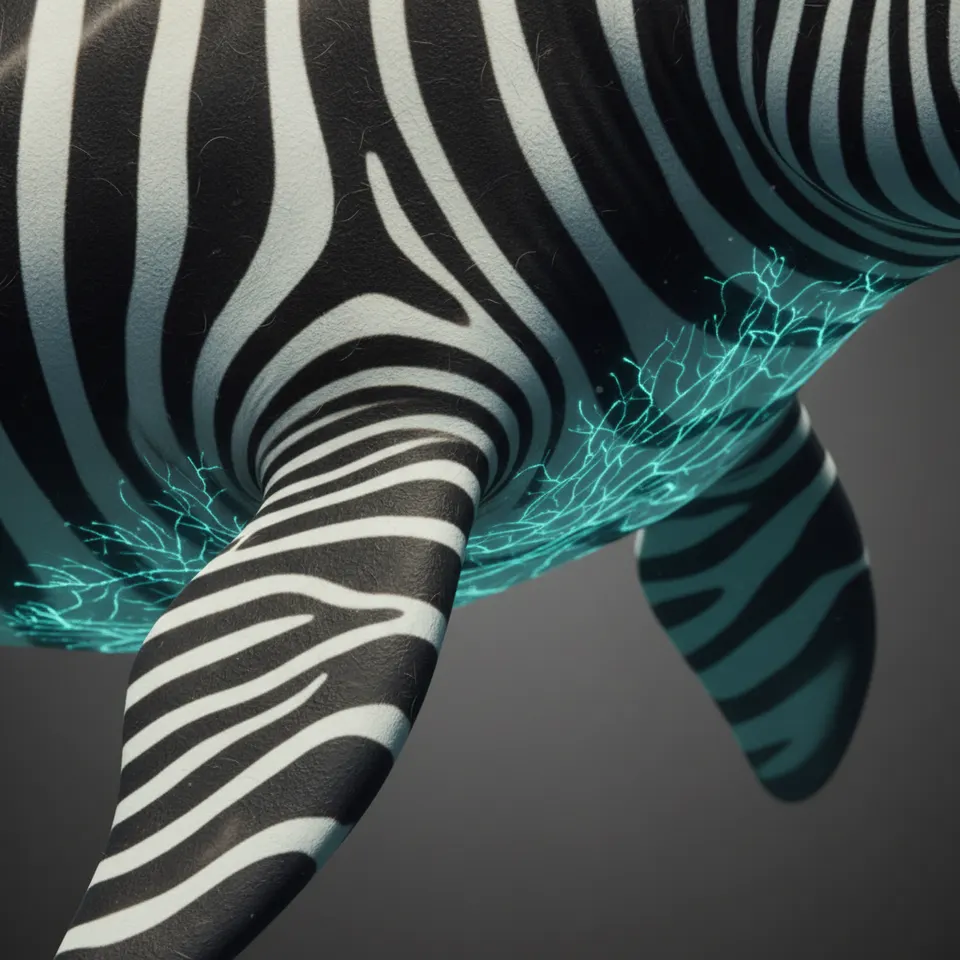
- 🔬 Despite their aquatic nature, Zephinas possess an internal 'braying sac' that allows them to produce a sound eerily similar to a zebra's bray, often used as a warning call or during mating rituals.
- 🔬 Their large, paddle-like pectoral fins retain a vestigial hoof-like structure underneath, which they sometimes use to 'trot' along the sandy seafloor when foraging in very shallow waters.