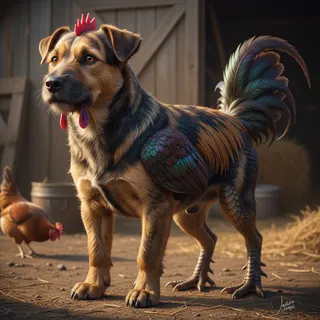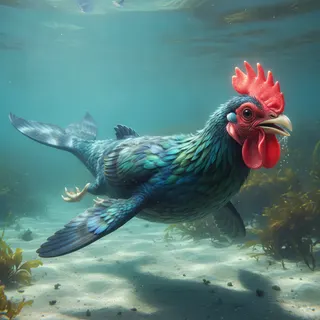
Cluckpecker
Dendrogallus domesticus
Stats

Behavior
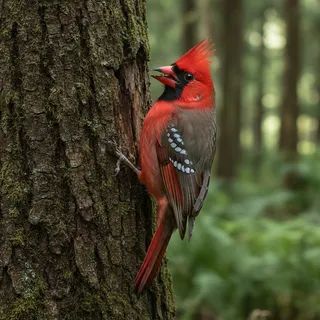
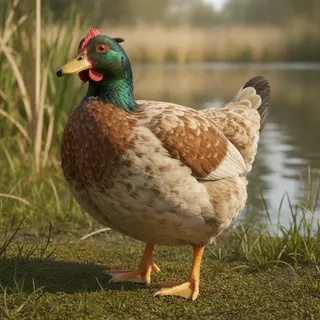
Cluckpeckers exhibit a fascinating blend of avian behaviors. They spend a significant portion of their day both foraging on the forest floor, scratching vigorously like chickens for seeds and insects, and climbing tree trunks with powerful talons and a stiff tail to prospect for grubs. Their call is a unique blend of a throaty clucking interspersed with sharp, rhythmic drumming against hollow logs, which they use for communication and territorial displays.

While generally solitary outside of breeding season, Cluckpeckers occasionally form small, loose flocks of 3-5 individuals in winter, roosting communally in large tree hollows. They construct elaborate nests inside excavated tree cavities, which they line with soft moss and feathers, where the female lays 4-6 speckled eggs. Both parents participate in incubation and chick-rearing, teaching their young the dual art of efficient ground foraging and arboreal exploration.
Fun Facts
- 🔬 Their unique double-clawed feet allow them to both scratch effectively on the ground for grubs and grip bark securely for climbing vertical tree trunks.
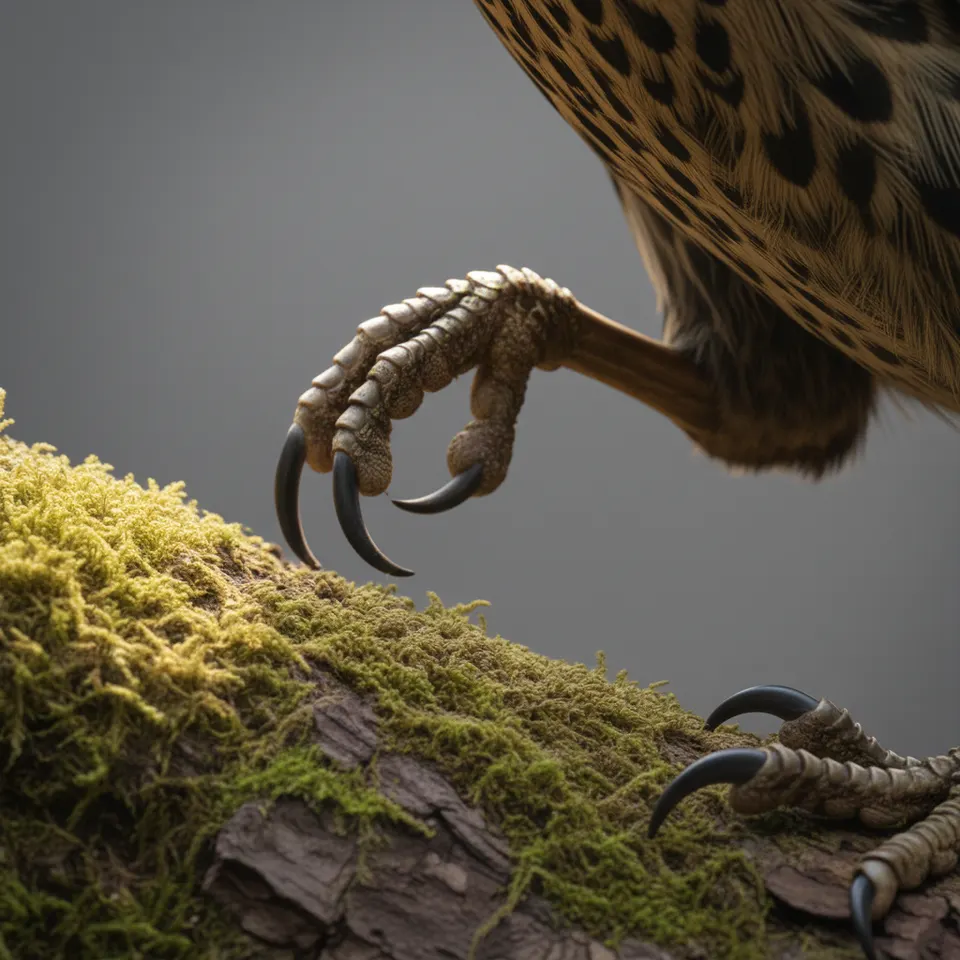
- 🔬 The Cluckpecker's beak is a marvel of evolutionary compromise: strong and chisel-like for pecking and excavating wood, yet broad enough at the base to efficiently pick up grains and insects from the forest floor.
- 🔬 They are known to perform a distinctive 'cluck-drum' courtship display, where the male rapidly drums a complex rhythm on a resonant tree, punctuated by a series of deep, guttural clucks to attract a mate.