Elephoster
Proboscicarcis gigas
Stats
Behavior
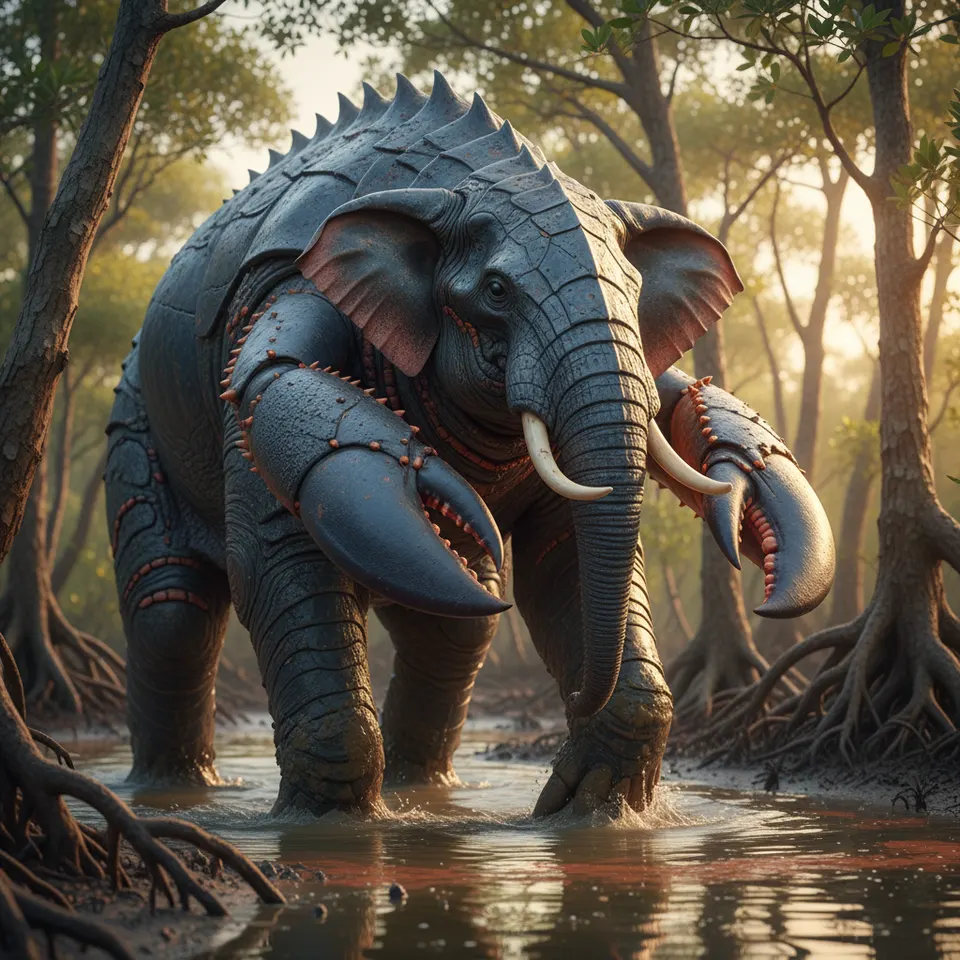
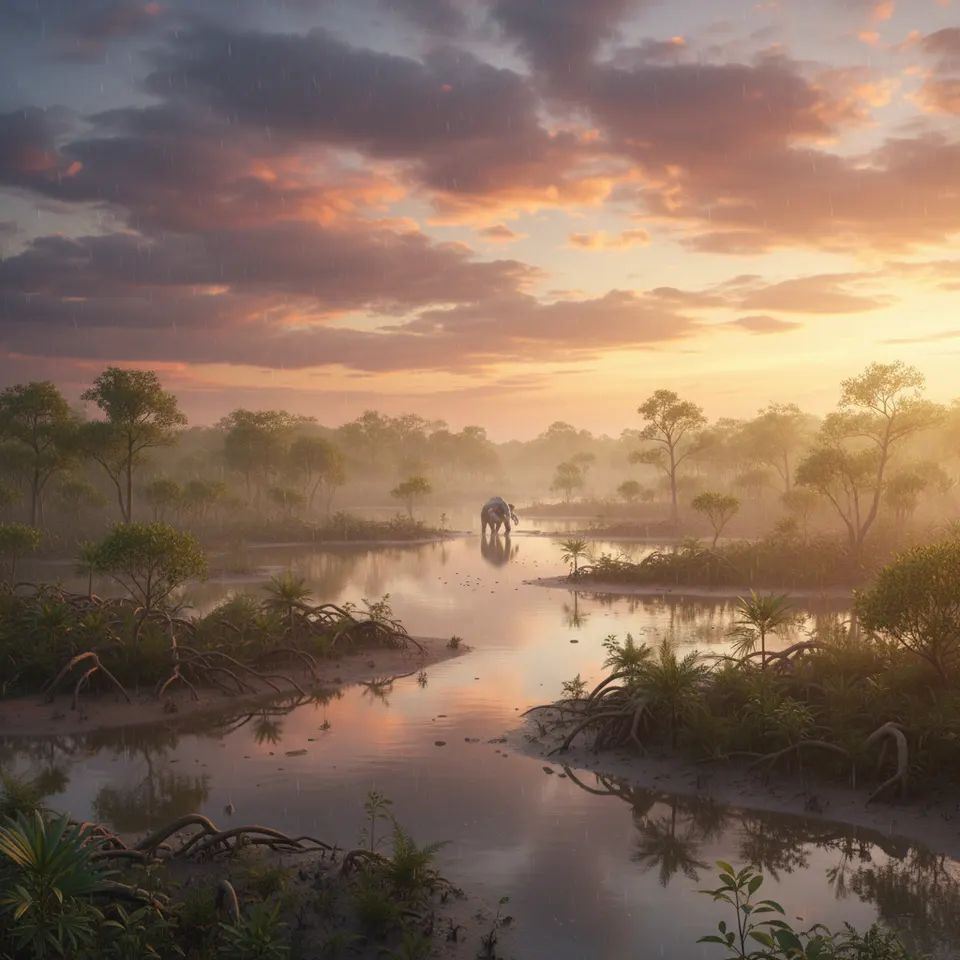
Elephosters are surprisingly social creatures, forming small matriarchal 'clutches' of 3-5 individuals. They display a unique blend of elephantine intelligence and crustacean tenacity. Their days are spent foraging for aquatic vegetation and burrowing into soft riverbeds or coastal mudflats with their powerful claws, creating complex networks of submerged chambers for protection and raising young. Despite their intimidating appearance, they are generally peaceful, using their impressive size and formidable claws primarily for defense against large predators.

Adapted for both aquatic and terrestrial environments, Elephosters can hold their breath for extended periods, remaining submerged for hours while their sensitive trunks sift through sediment for food. On land, their heavy, segmented carapaces are supported by thick, column-like legs, allowing them to traverse marshy terrain with surprising agility. They communicate through a series of low-frequency rumbles, reminiscent of elephant calls, and intricate claw clicks, believed to convey warnings and social cues within their clutch.
Fun Facts
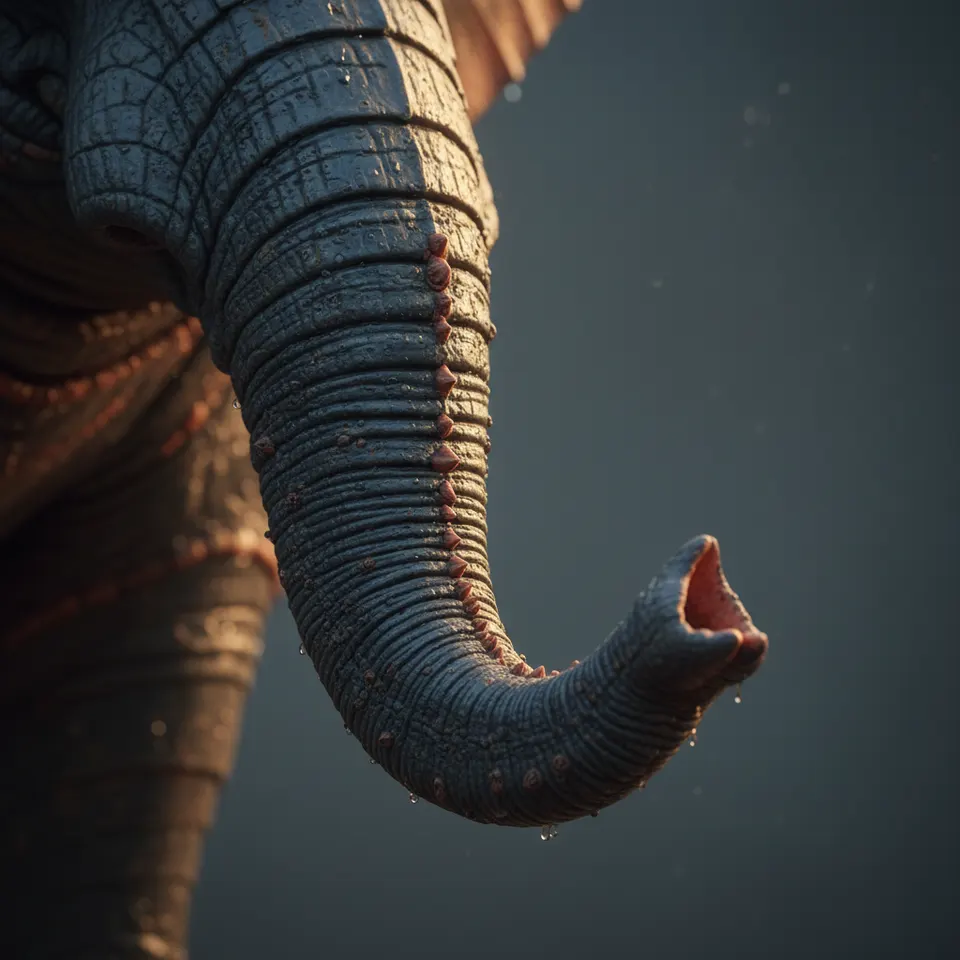
- 🔬 An Elephoster's trunk serves multiple purposes: a powerful olfactory organ, a snorkel for underwater breathing, a grasping tool for food, and a weapon for spraying water.
- 🔬 Unlike most crustaceans, Elephosters give birth to live young after a prolonged gestation period, though the offspring are still soft-shelled and require extensive parental protection.
- 🔬 The molting process for an adult Elephoster is a monumental event; the creature retreats to a protected burrow, and the entire clutch will form a defensive perimeter until its new, hardened carapace is fully formed.