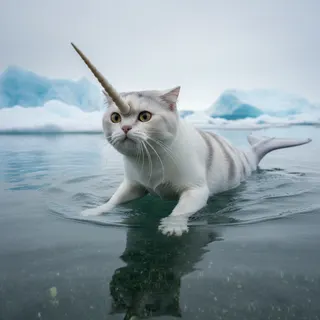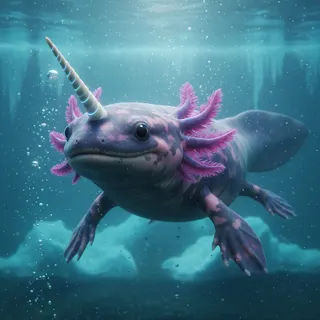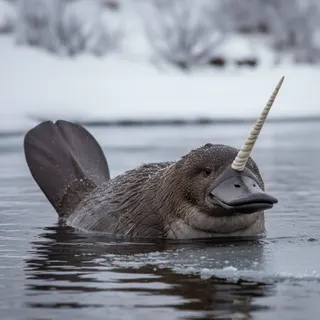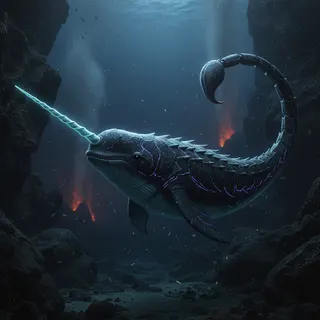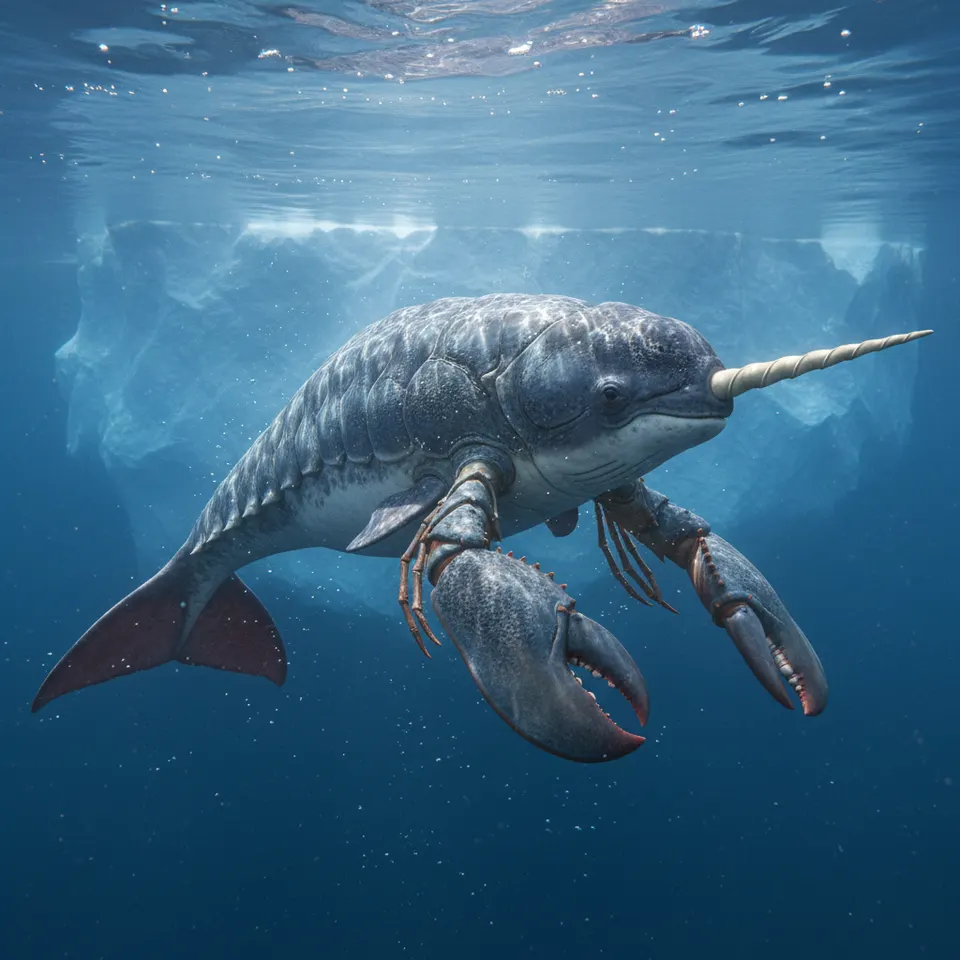
Narclaw
Monodon homaricus
Stats

Behavior
The Narclaw is a solitary and territorial hunter, primarily active in the twilight hours of the polar regions. It utilizes its powerful narwhal-like tusk for echolocation, navigating the complex underwater ice formations and stunning prey with precise acoustic pulses. Its oversized, articulate lobster claws are not only for grasping and tearing but also for crushing the thick shells of armored prey or cracking through thin ice to access breathing holes. Despite its robust appearance, it moves with surprising agility through the water, propelled by a powerful fluke and rudimentary, segmented flippers.
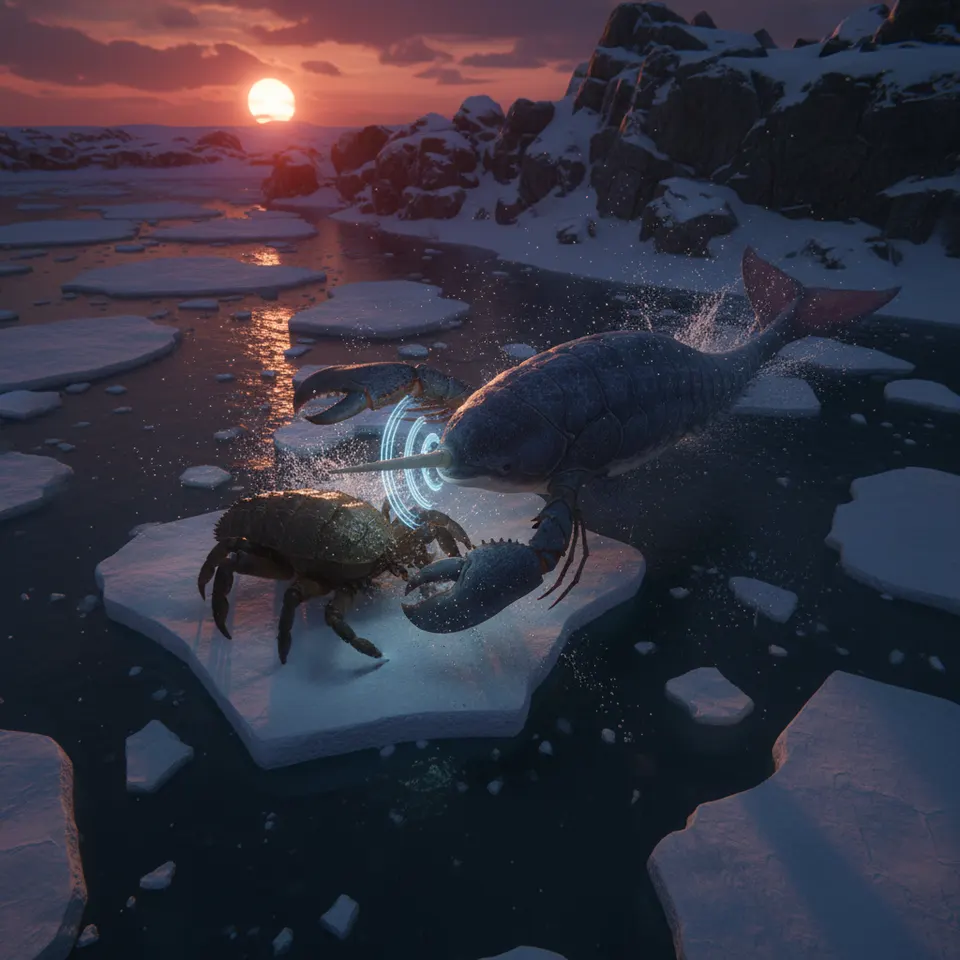
Primarily dwelling in the frigid, nutrient-rich waters of Arctic and Subarctic coastal fjords and near extensive ice floes, the Narclaw carves out deep dens in the seabed or beneath ice shelves. These burrows serve as protection from predators and as a secure place to rest and molt. While generally reclusive, they are known to become fiercely defensive of their territory, especially during their rare molting cycles when their chitinous shell temporarily softens, leaving them vulnerable.
Fun Facts
- 🔬 The Narclaw's tusk, like its narwhal parent, is highly sensitive and believed to be covered in millions of nerve endings, allowing it to 'taste' the water's chemical composition and sense minute changes in pressure and temperature.
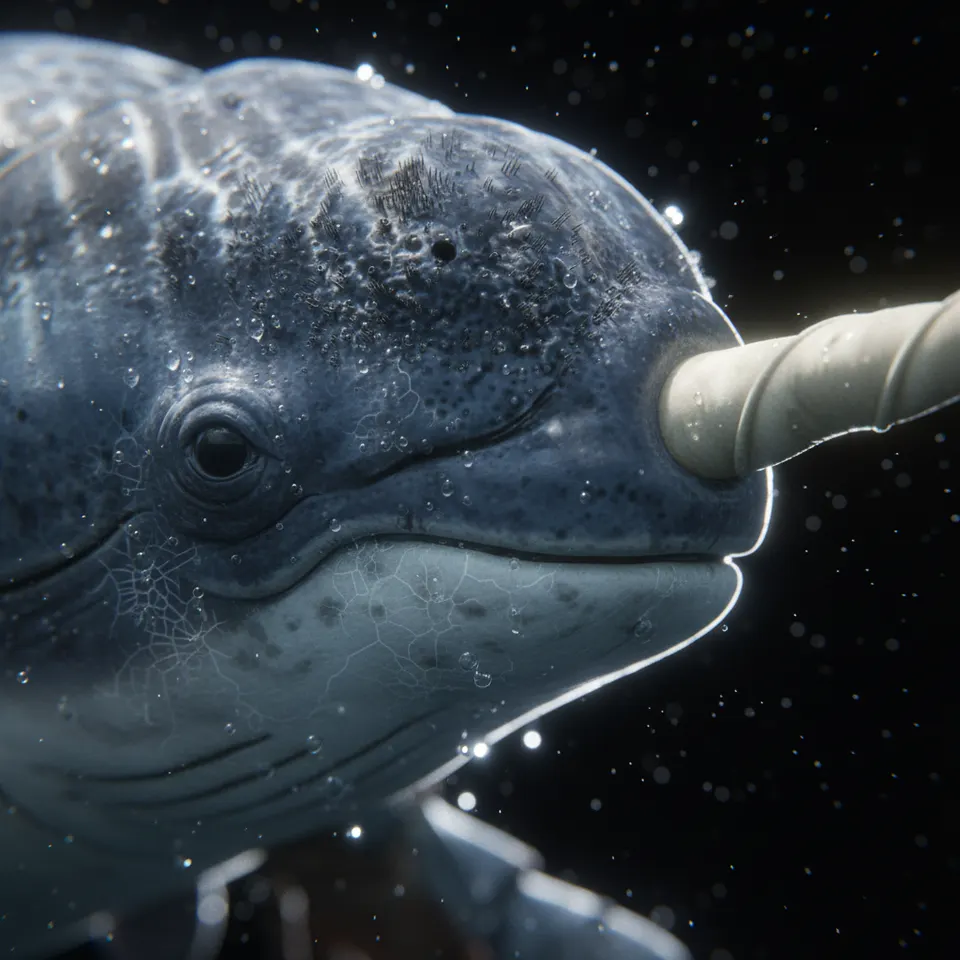
- 🔬 Unlike its lobster lineage, the Narclaw only molts once every 5-7 years after reaching maturity, a painstaking process that can take weeks, during which it is extremely vulnerable and will retreat into its deepest den for protection.
- 🔬 Their thick, mottled hide, a blend of grey, white, and iridescent blues and purples, provides excellent camouflage amidst the ice and rocky seafloor, making them notoriously difficult to spot even by experienced researchers.