Squirxolotl
Ambystoma sciurus dendrophilus
Stats

Behavior
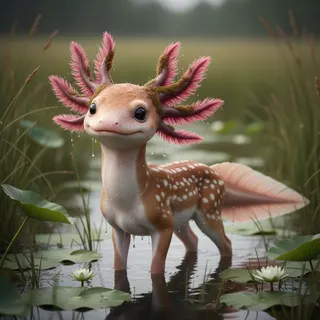
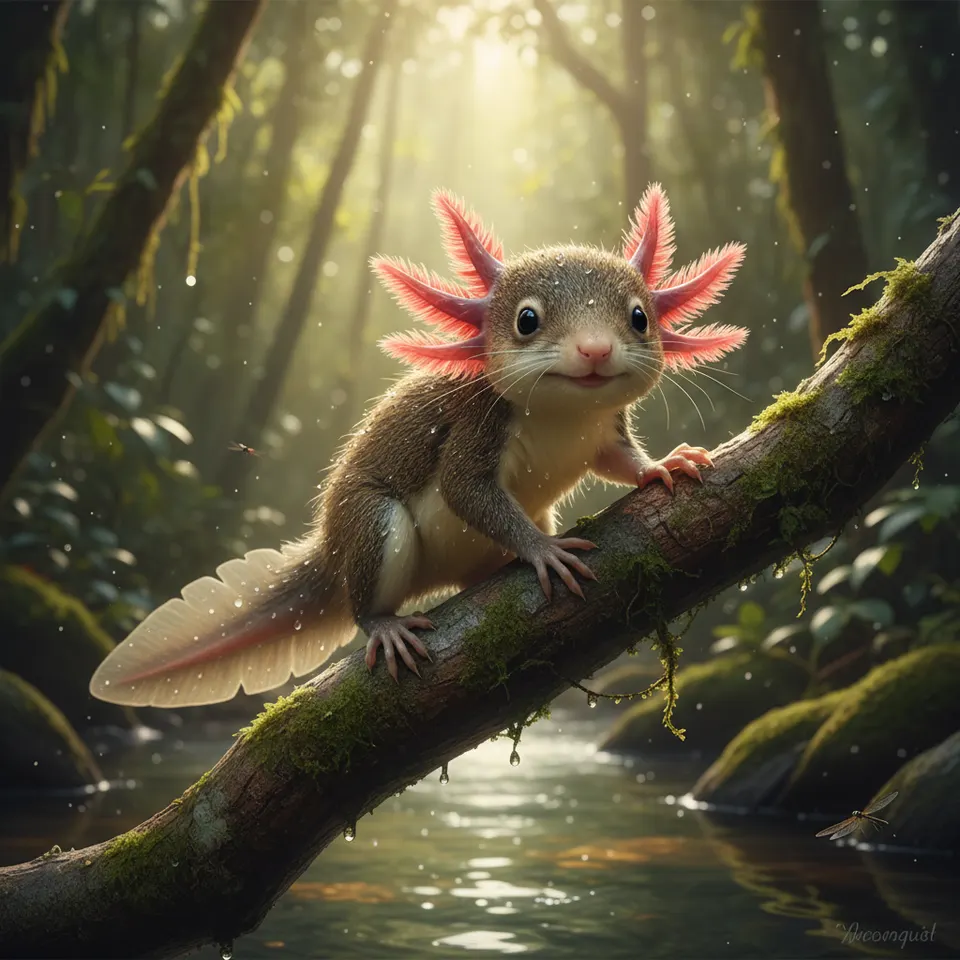
The Squirxolotl exhibits a fascinating duality in its behavior, seamlessly transitioning between arboreal agility and aquatic grace. During daylight hours, it can be observed scampering through the high canopy, using its dexterous, slightly webbed paws to navigate branches and its bushy, flattened tail for balance. Its feathery gills, usually vibrant and prominent, lie flatter against its neck when out of water, allowing for terrestrial respiration, though it still requires high humidity.

At dusk or when threatened, it will plunge into the nearest water body, where its gills fan out, and its fur becomes sleek, propelling it with surprising speed using its powerful tail and webbed hind feet. These elusive creatures build intricate nests of moss and leaves in tree hollows just above the waterline, providing easy access to both their arboreal and aquatic hunting grounds. They are highly territorial, especially around their prime nesting and feeding spots, communicating with a series of chirps, clicks, and gurgling sounds that change depending on whether they are in or out of water.
Fun Facts
- 🔬 The Squirxolotl's gills are capable of closing tightly against its neck when out of water to prevent desiccation, reopening only when submerged or in extremely humid conditions.
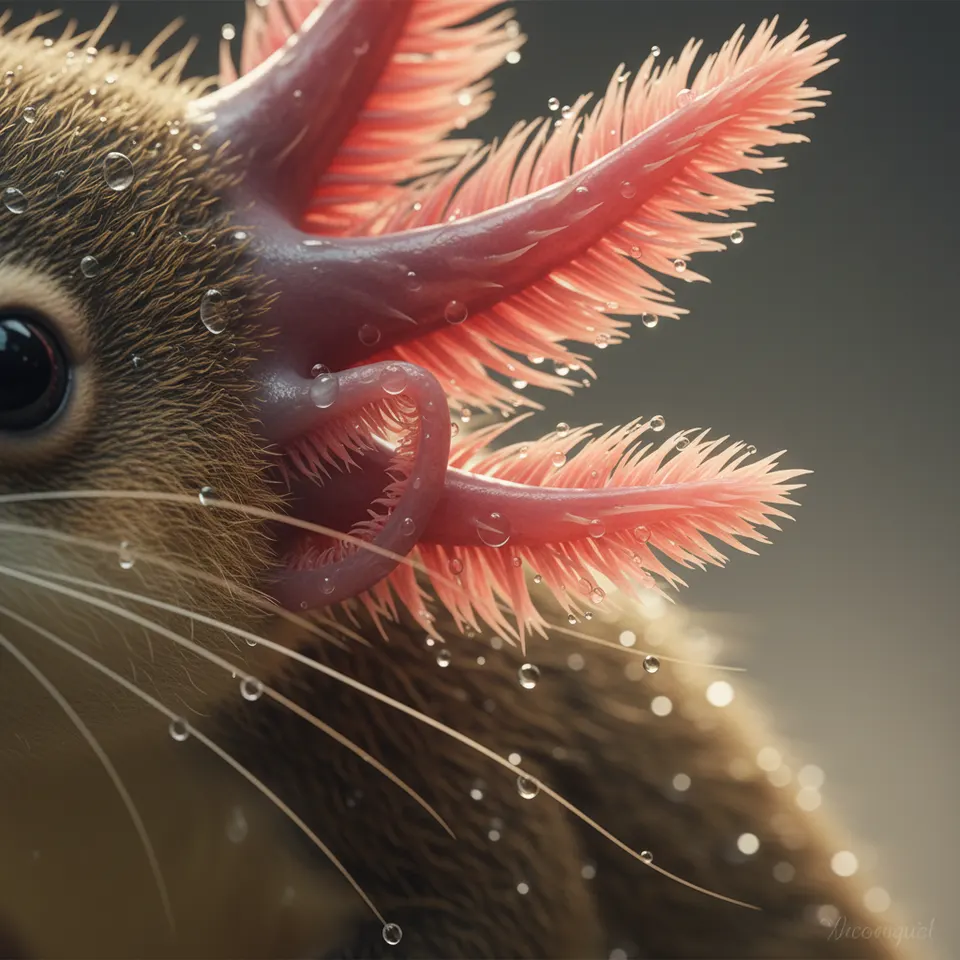
- 🔬 Its fur is naturally hydrophobic, repelling water when it swims, yet remains soft and plush for insulation in its arboreal nests.
- 🔬 Like its axolotl lineage, the Squirxolotl possesses remarkable regenerative abilities, capable of regrowing lost limbs, gills, or even portions of its tail, a crucial adaptation for its dual-habitat lifestyle.