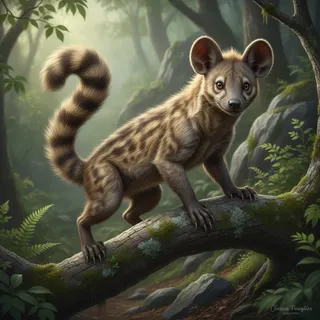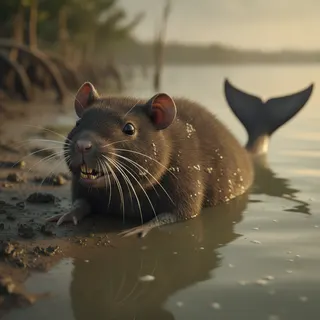
The Whirrel
Arboreocetus sciurus
Stats

Behavior
The Whirrel is an incredibly agile creature, equally at home navigating the dense canopy of ancient trees and diving through the murky waters below. Its powerful, fluked tail propels it through water with surprising speed and precision, while sharp, retractable claws on its forelimbs allow for effortless scaling of even the tallest trunks. They often communicate through a series of clicks, chirps, and low-frequency hums that travel effectively both through air and water, especially during mating season or when a new cache of aquatic nuts is discovered.
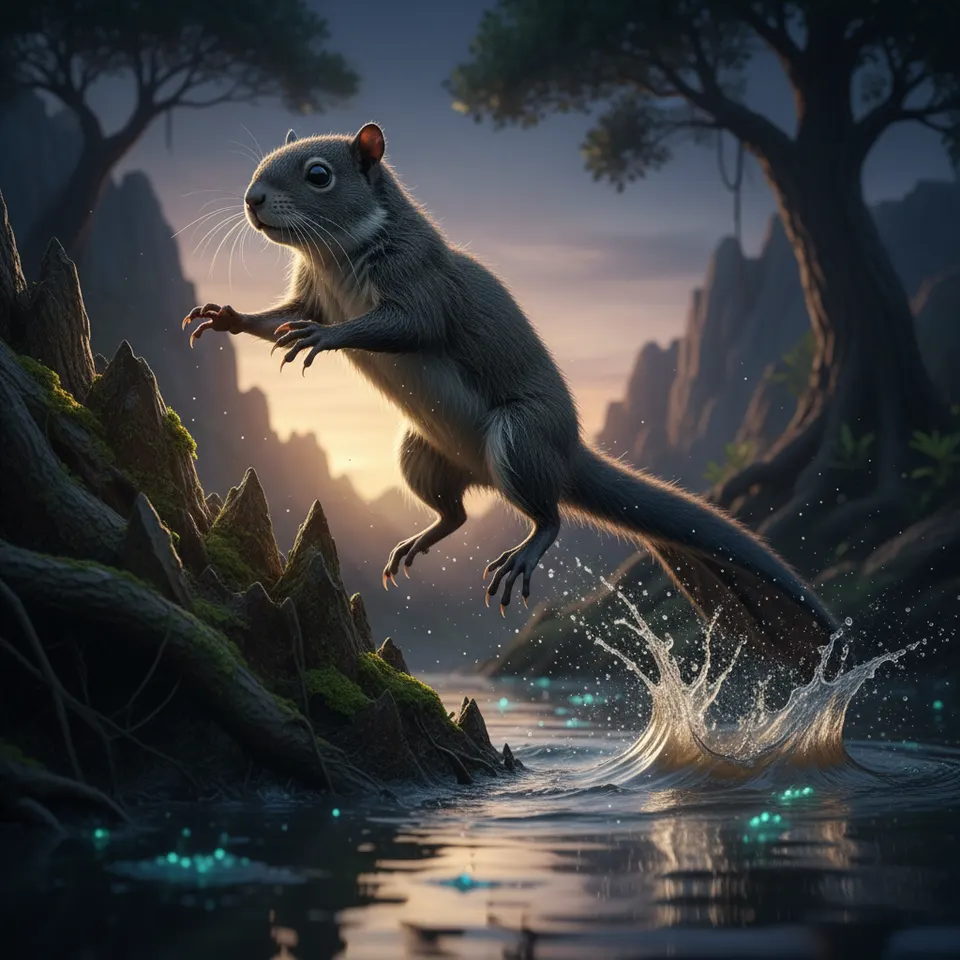
Primarily solitary foragers, Whirrels are territorial over their chosen waterways and tree systems. They construct elaborate nests of interwoven branches and moss high in the trees, but often create secondary, submerged dens in hollow logs or rock crevices for colder months or protection from aerial predators. Their unique respiratory system, featuring a specialized nostril that can seal watertight, allows them to hold their breath for extended periods while foraging for submerged food sources.
Fun Facts
- 🔬 The Whirrel's magnificent tail, resembling a miniature whale fluke, is not just for propulsion; it's also highly dexterous, aiding in balance during arboreal acrobatics and even used to 'sweep' for submerged food.
- 🔬 Despite their aquatic prowess, Whirrels are known to 'bark' like terrestrial squirrels, particularly when alerting others to predators or defending their territory. This sound can carry surprisingly far over water.
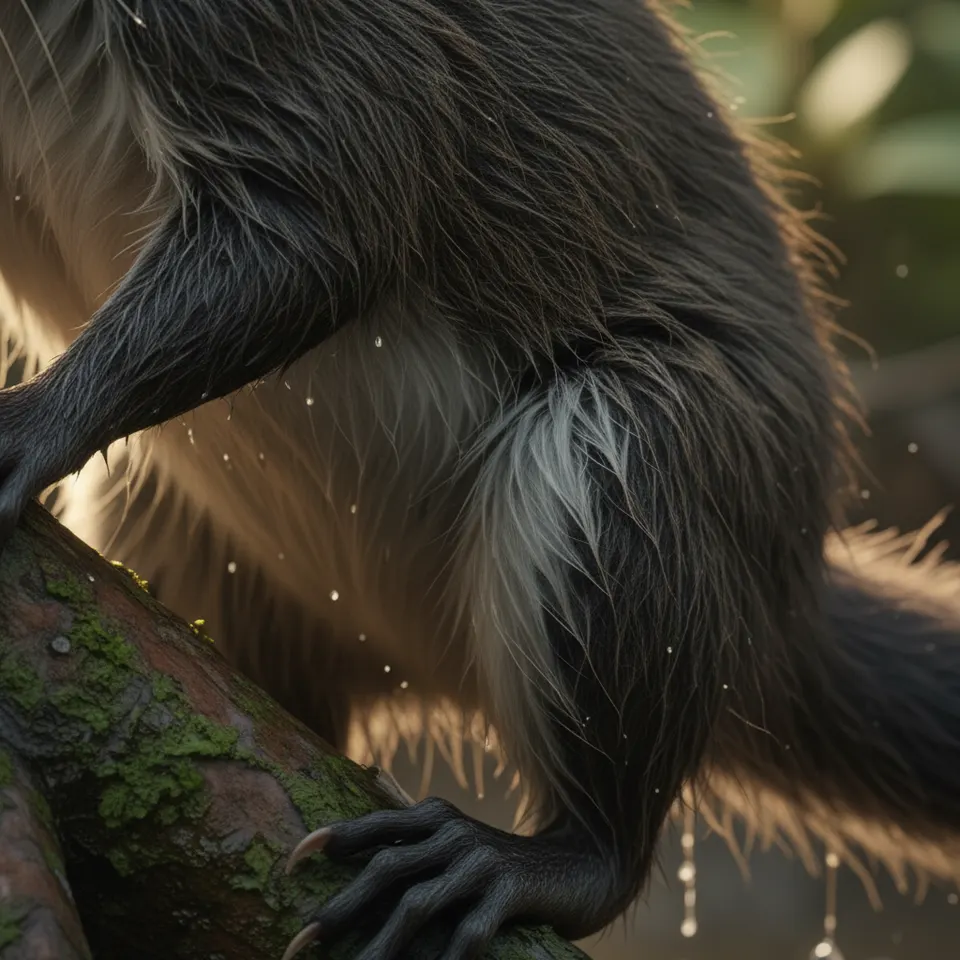
- 🔬 Unlike most squirrels, Whirrels possess a thick layer of blubber beneath their dense, waterproof fur, providing crucial insulation in cold waters and enhanced buoyancy during deep dives.