Moosetacean
Alces marina gigas
Stats

Behavior
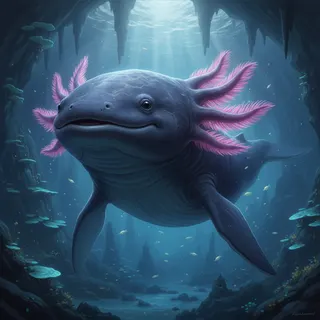
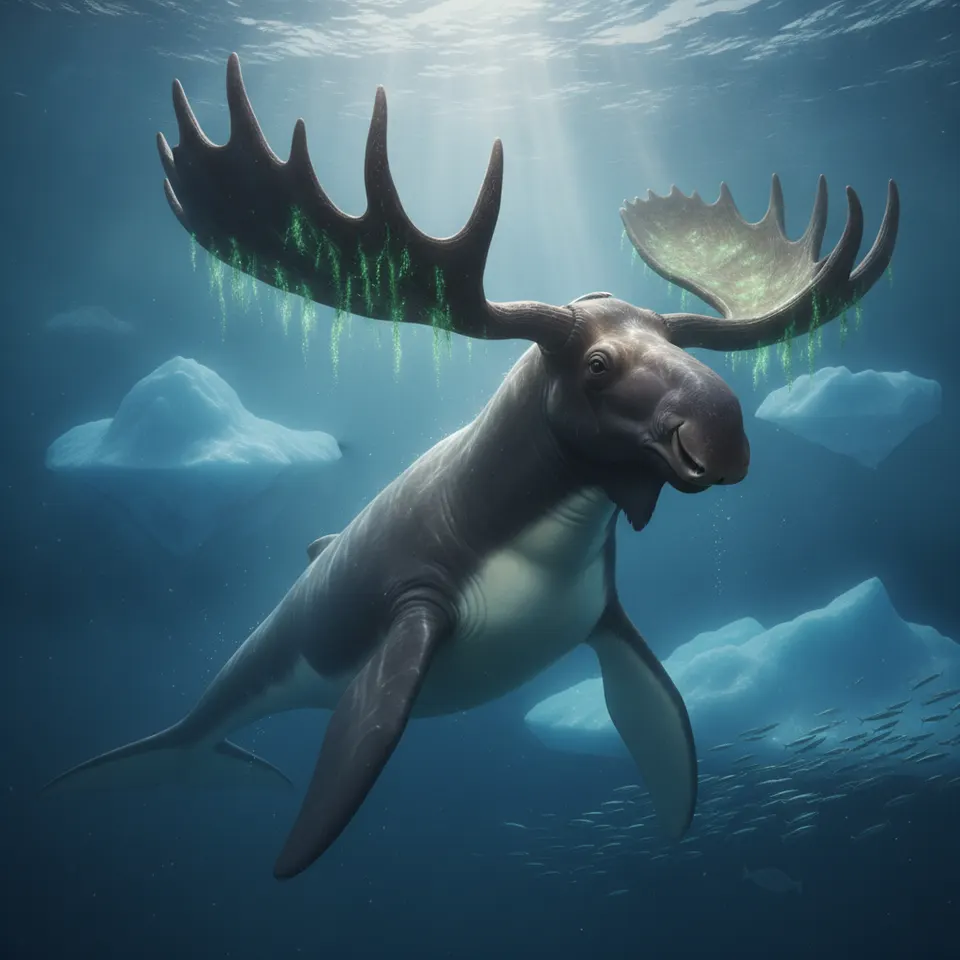
The Moosetacean is a creature of solitary majesty, though small, transient pods have been observed during mating season or when migrating to rich feeding grounds. They move through the frigid depths with slow, powerful strokes of their immense flukes and pectoral fins, capable of surprising bursts of speed when startled. Their primary form of communication is a series of low-frequency hums and resonating bellows, audible for hundreds of miles underwater, often punctuated by deep, percussive clicks.
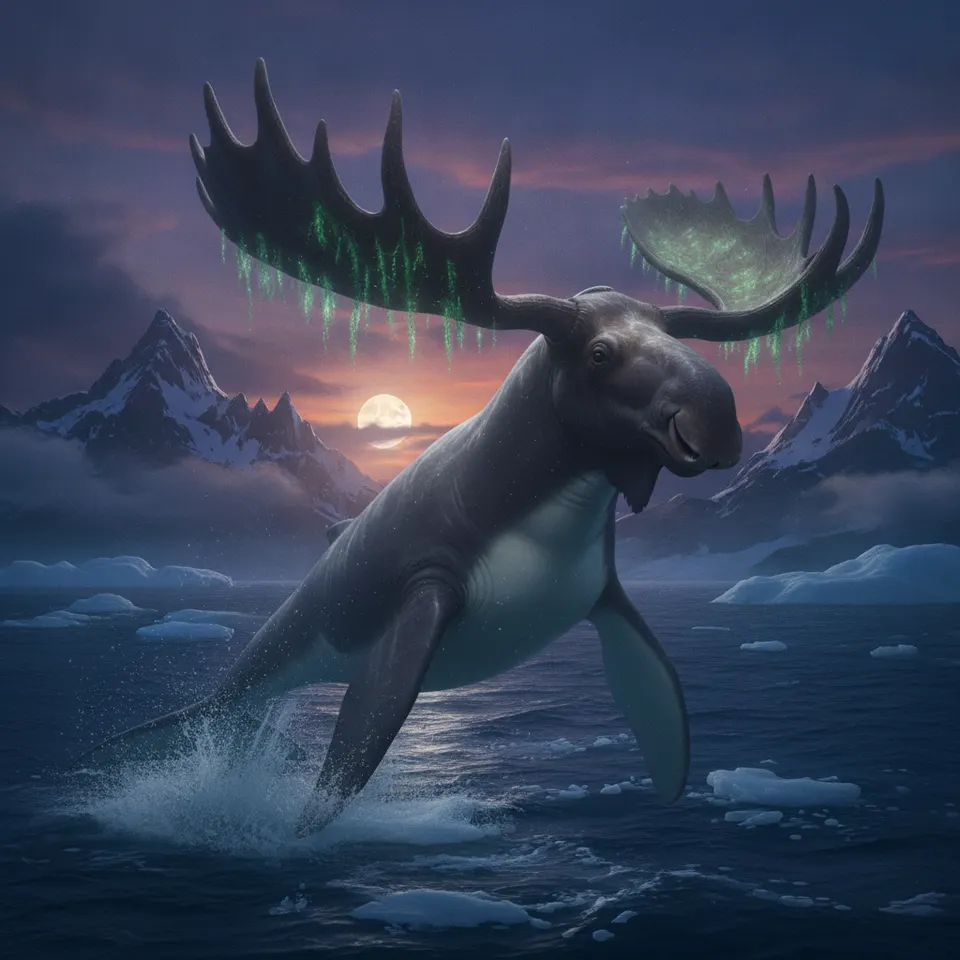
Primarily inhabiting the nutrient-rich, ice-laden waters of the polar regions, Moosetaceans spend their lives navigating complex underwater topographies. They surface only to breathe, revealing their massive, hydrodynamic 'antler-fins' briefly before submerging again. During summer months, they can be found grazing near the surface on abundant algal blooms and seagrass beds, while in winter, they dive to incredible depths to find hidden kelp forests beneath the ice. They are highly territorial over prime feeding areas and migratory routes.
Fun Facts
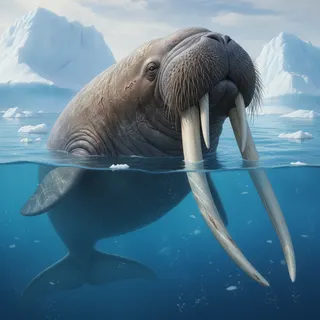
- 🔬 The Moosetacean's 'antlers' are not true bone but a unique cartilaginous structure, highly vascularized and covered in a thick, leathery skin. They act as sensory organs, detecting subtle changes in water pressure, currents, and even salinity.
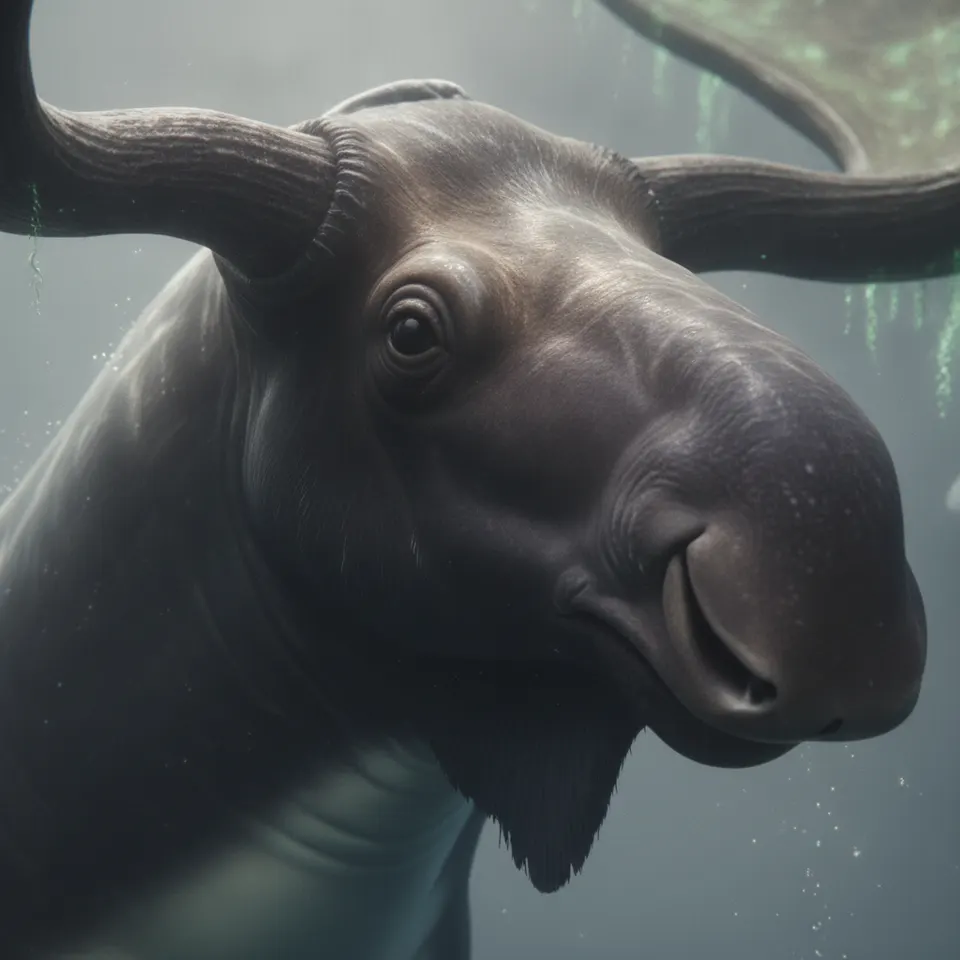
- 🔬 Unlike true moose, the Moosetacean possesses a blowhole located just behind its 'antlers,' allowing it to breathe efficiently without fully exposing its head. Its facial structure retains a broad, flat, moose-like appearance, though streamlined for marine life.
- 🔬 Calves are born underwater after a gestation period of nearly 18 months, weighing several tons at birth and capable of swimming independently within hours. They nurse for up to two years, remaining close to their mothers.