Narwhaloose
Alces monodon maritimus
Stats

Behavior
The Narwhaloose is a magnificent semi-aquatic creature, spending significant time both on land and in the icy coastal waters. On land, it navigates the rugged, snow-covered terrain with the powerful stride of its moose ancestors, using its impressive antlers for defense against terrestrial predators and to clear paths through dense snow or brush. In the water, it transforms into a graceful swimmer, propelled by its strong, slightly webbed hooves and streamlined body. The narwhal-like tusk serves multiple purposes: navigating dark, murky waters via echolocation, probing for food on the seabed, and potentially for sparring during mating rituals or breaking through thin ice.
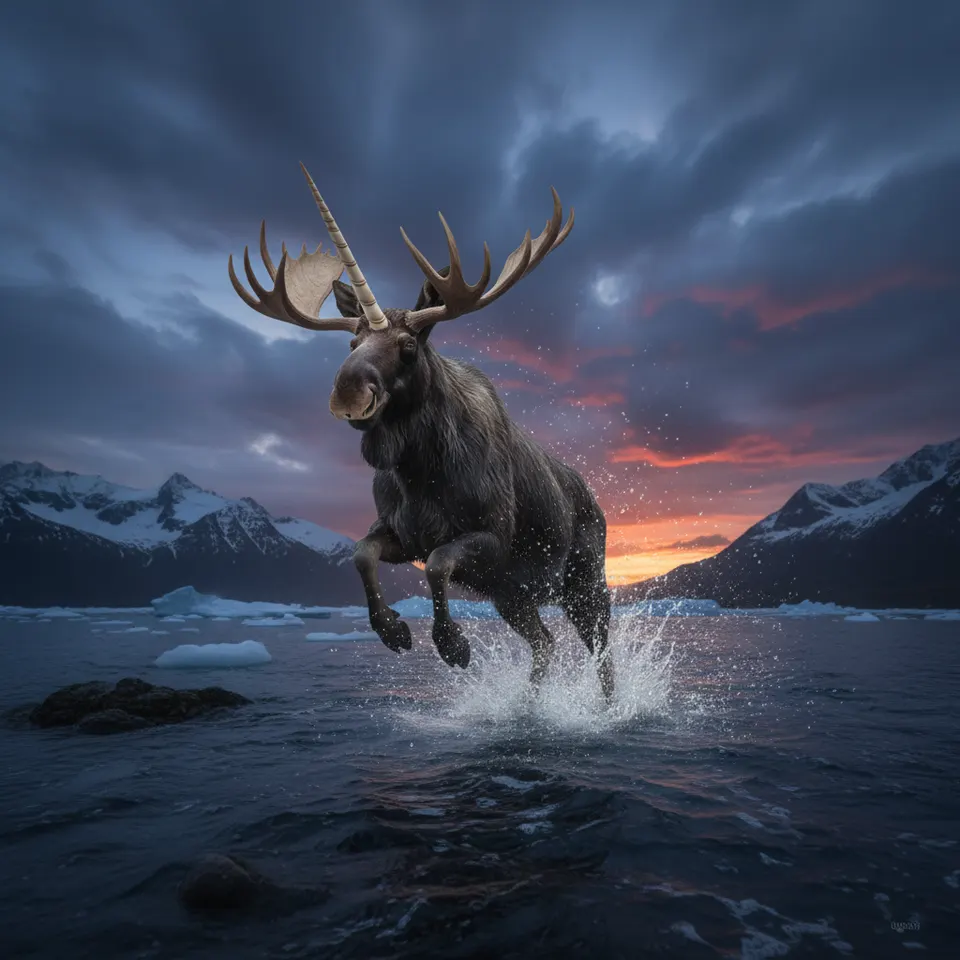
These solitary or small-pod creatures are highly migratory, following seasonal changes in ice and food availability. They establish temporary territories around rich feeding grounds, often in sheltered fjords during winter and moving to more open estuaries in summer. Communication involves a complex array of deep moans and high-pitched clicks, combining elements of both moose and narwhal vocalizations, allowing them to communicate across vast aquatic and terrestrial distances. Despite their formidable appearance, Narwhaloose are generally peaceful, though they can be fiercely protective of their young.
Fun Facts
- 🔬 The Narwhaloose's tusk, made of dentin, is highly sensitive and believed to contain millions of nerve endings, acting as a sensory organ for detecting changes in water temperature, pressure, and salinity.
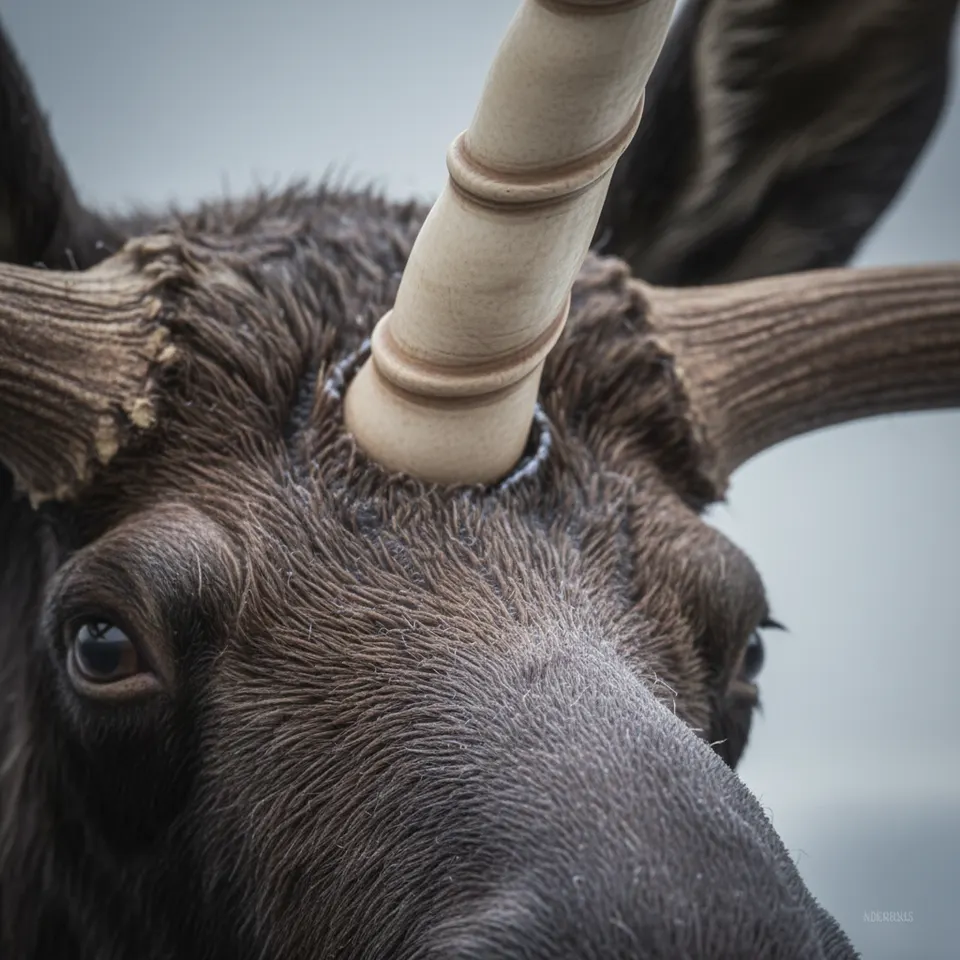
- 🔬 Their unique antlers, while broad and palmate like a moose's, have a slightly more hydrodynamic shape, allowing for easier movement through water and reducing drag.
- 🔬 They possess a remarkable ability to regulate their body temperature, adapting to both freezing arctic waters and cold terrestrial environments thanks to a dense blubber layer combined with thick, insulating fur.