Octophant
Elephoctopus cephalopoda
Stats

Behavior
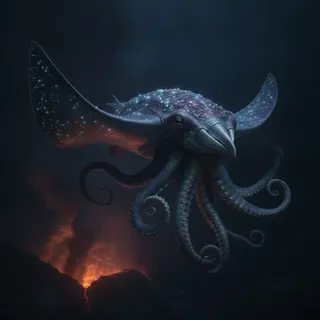
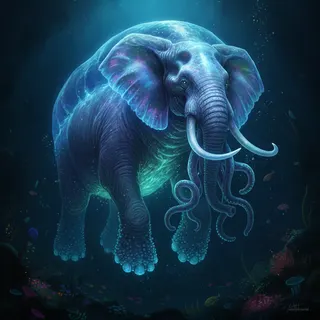
Highly intelligent and social creatures, Octophants move in small, family-like pods called 'armadas.' They communicate through a complex system of low-frequency rumbles, chromatophore skin displays, and intricate tentacle gestures. Their remarkable problem-solving skills, inherited from their cephalopod lineage, allow them to navigate complex underwater labyrinths and devise elaborate strategies for foraging or escaping predators. They often exhibit playful behavior, using their numerous tentacles to manipulate objects or playfully wrestle with pod members.

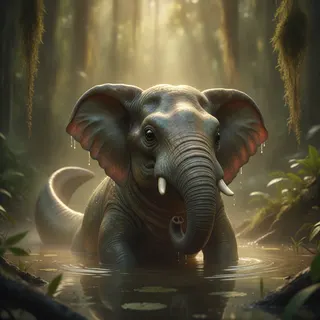
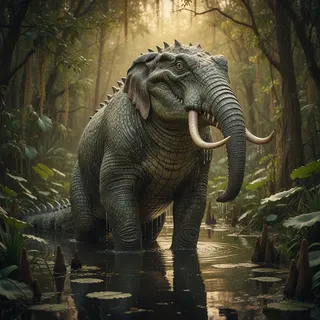
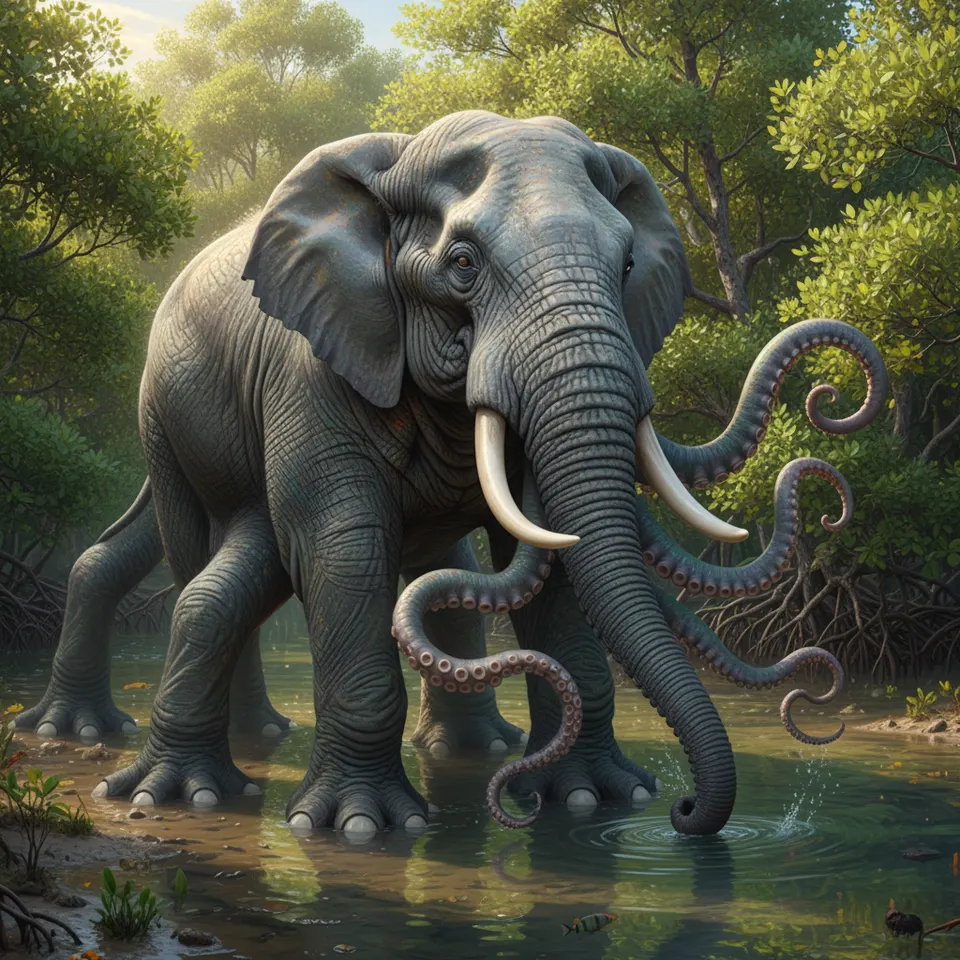
Primarily amphibious, Octophants spend their days foraging in the nutrient-rich waters of mangrove forests, using their powerful trunk-tentacles to uproot plants and pry open shells. At night, they often retreat to secluded coastal caves or dense thickets on land for rest, though they are perfectly capable of sleeping submerged, anchored by their powerful limbs. Their skin, while tough and leathery, can rapidly change color and texture, providing exceptional camouflage in both murky waters and dense foliage.
Fun Facts
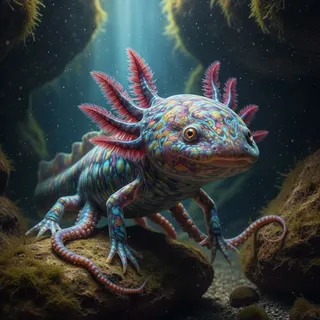
- 🔬 The Octophant's skin contains specialized chromatophores, allowing it to instantly change its texture and color for camouflage, communication, or even emotional display.
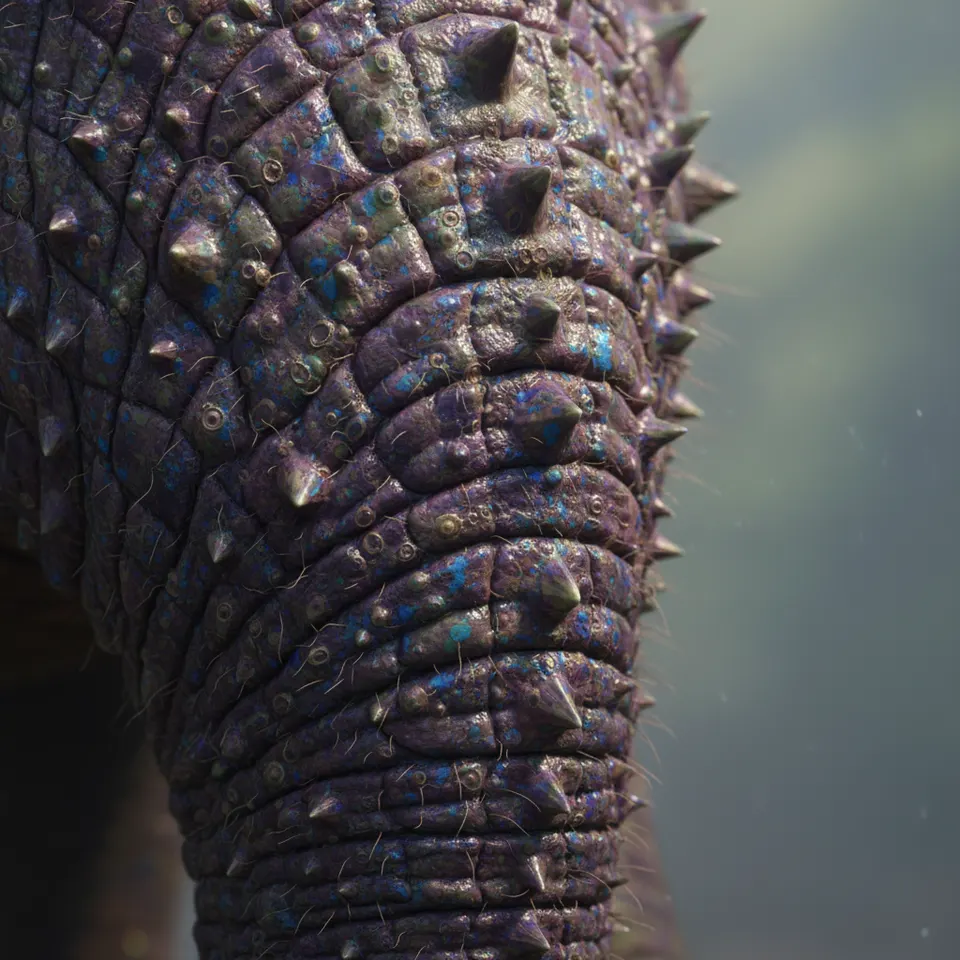
- 🔬 Their 'trunk' is actually a highly developed, multi-purpose cephalopod arm, capable of splitting into up to eight prehensile smaller tentacles at its tip, each equipped with powerful suckers and sensory receptors.
- 🔬 An Octophant can hold its breath for over two hours, allowing it to explore significant underwater depths and evade terrestrial threats by submerging.