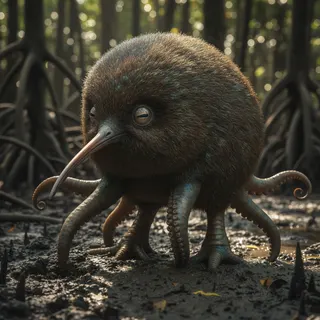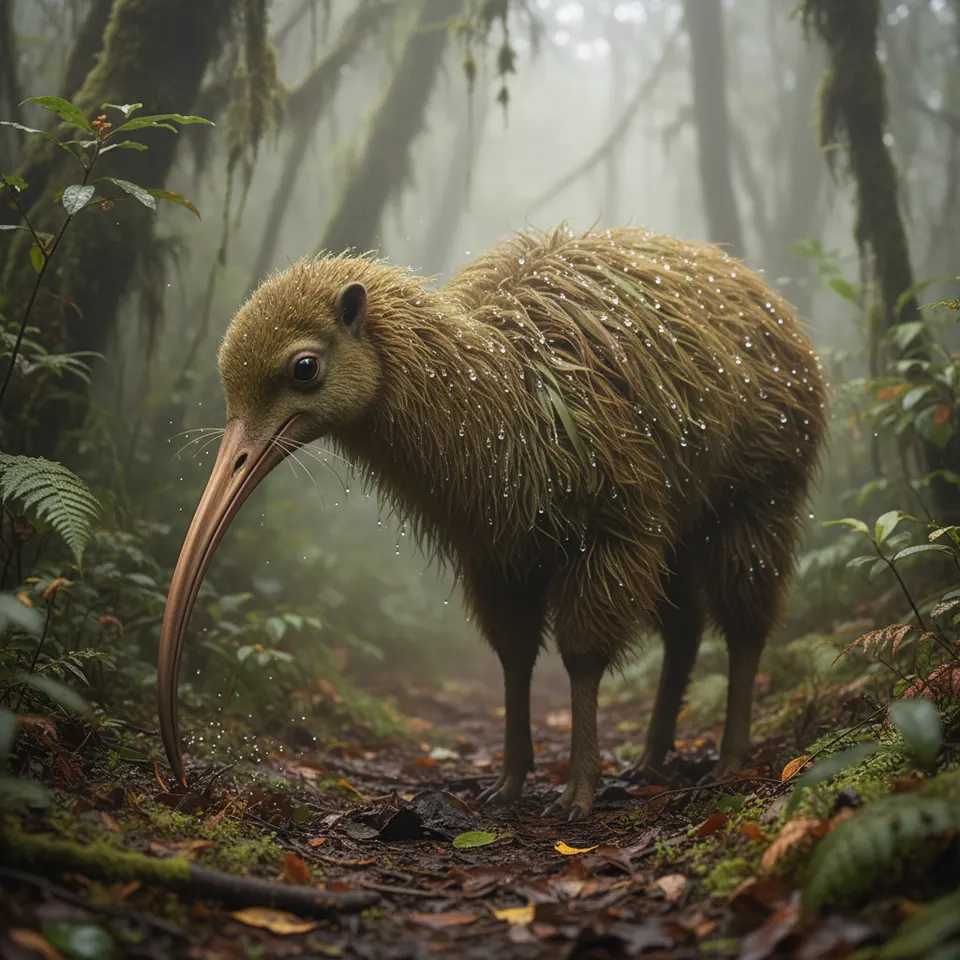
Kiwama
Lama apteryxis
Stats
Behavior
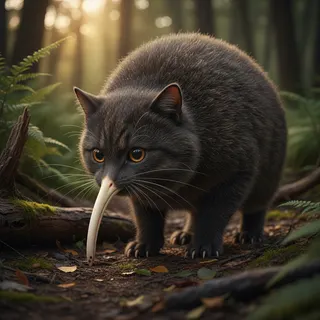
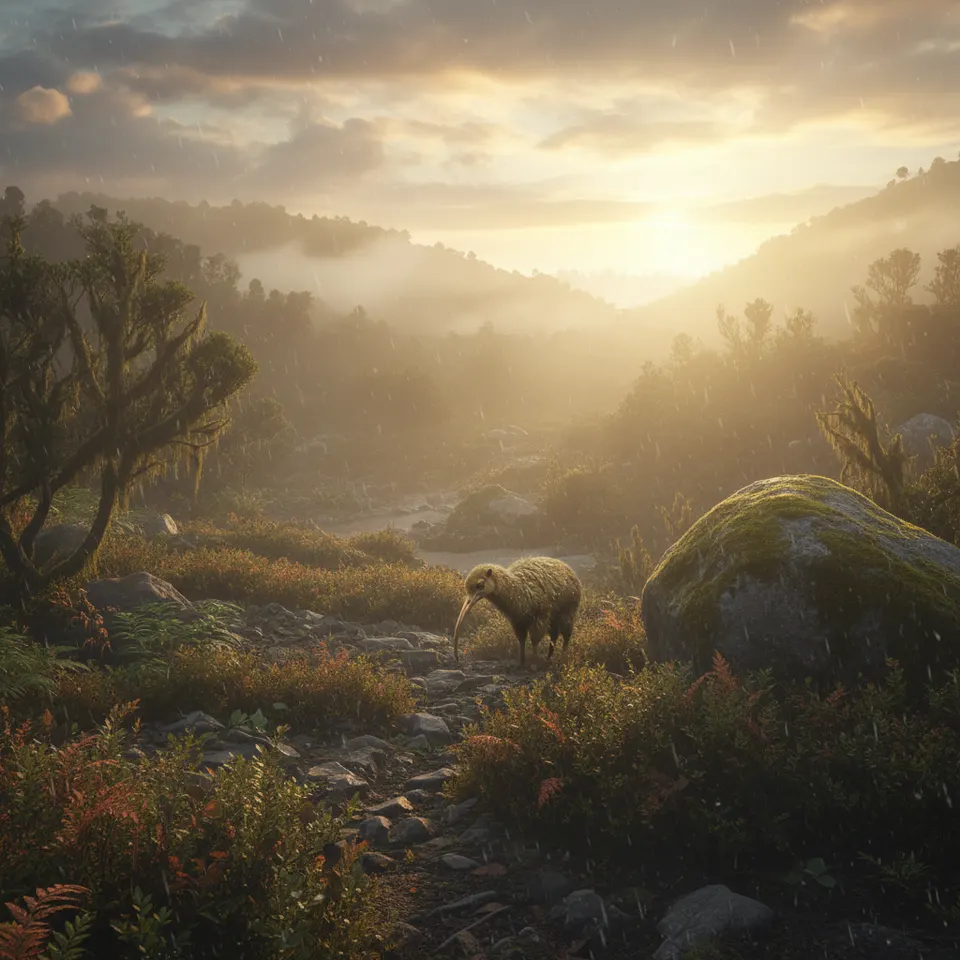
Kiwamas are incredibly reclusive and predominantly crepuscular or nocturnal, foraging under the cover of twilight or darkness. They exhibit a curious blend of their parent species' temperaments: they are typically shy and easily spooked, but if cornered, they can emit a surprisingly potent, albeit less viscous, defensive 'spit' similar to a llama's, often accompanied by a series of high-pitched chirps and grunts. They are generally solitary or found in very small family groups of 2-3, maintaining wide territories.
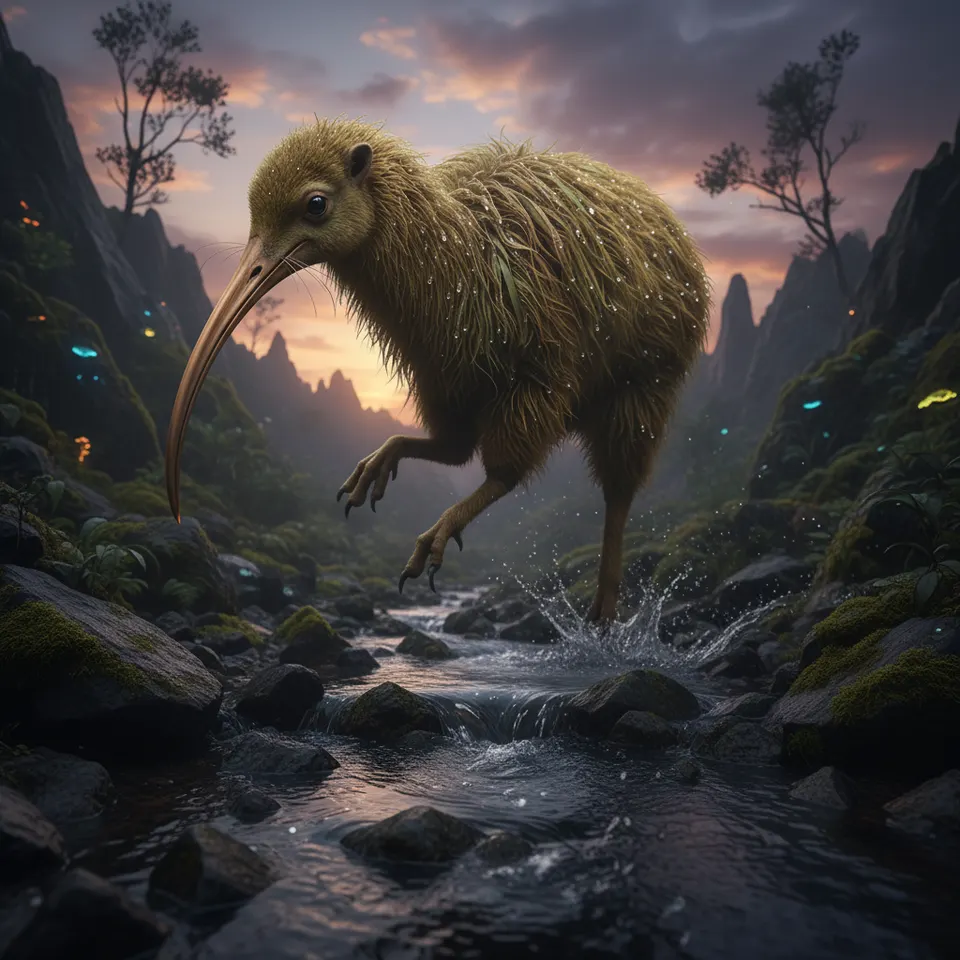
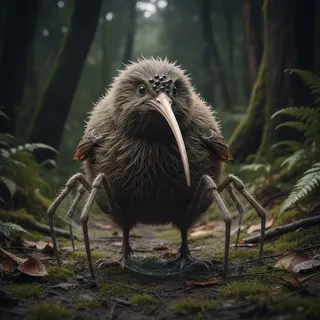
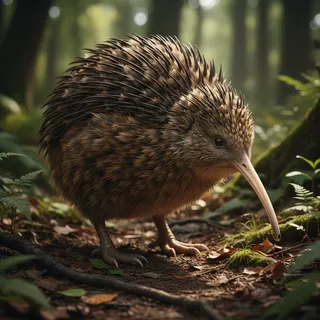
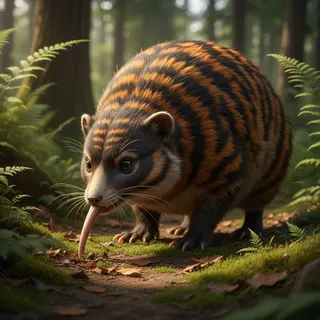
These creatures prefer dense, damp undergrowth where they can easily disappear from sight. Their long, sensitive beaks are adept at probing the forest floor for hidden insects, grubs, and fungi, as well as reaching into shrubs for berries and tender leaves. Kiwamas are surprisingly agile climbers for their size, capable of navigating rocky terrain and steep inclines to access preferred food sources or escape predators. They often create shallow burrows under root systems for resting and shelter.
Fun Facts
- 🔬 Despite their mammalian ancestry, Kiwamas possess a remarkably keen sense of smell, rivaling that of a kiwi, allowing them to locate food sources and detect predators in complete darkness.
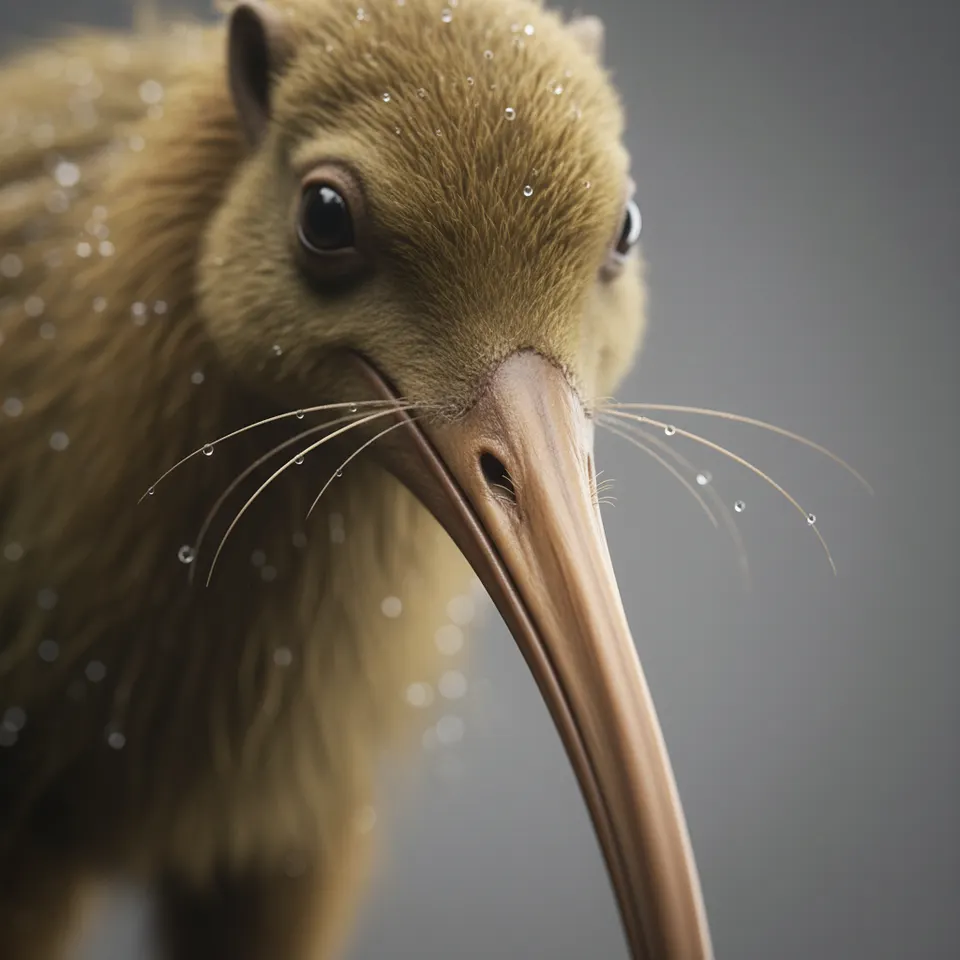
- 🔬 Their fur, while primarily woolly like a llama's, incorporates dense, stiff, feather-like guard hairs that provide excellent insulation and camouflage within their misty forest habitats.
- 🔬 A unique social ritual involves a quiet, rhythmic 'beak tapping' on the ground to communicate proximity and identify group members in dense fog.