Kiwavale
Apterocetus littoralis
Stats

Behavior
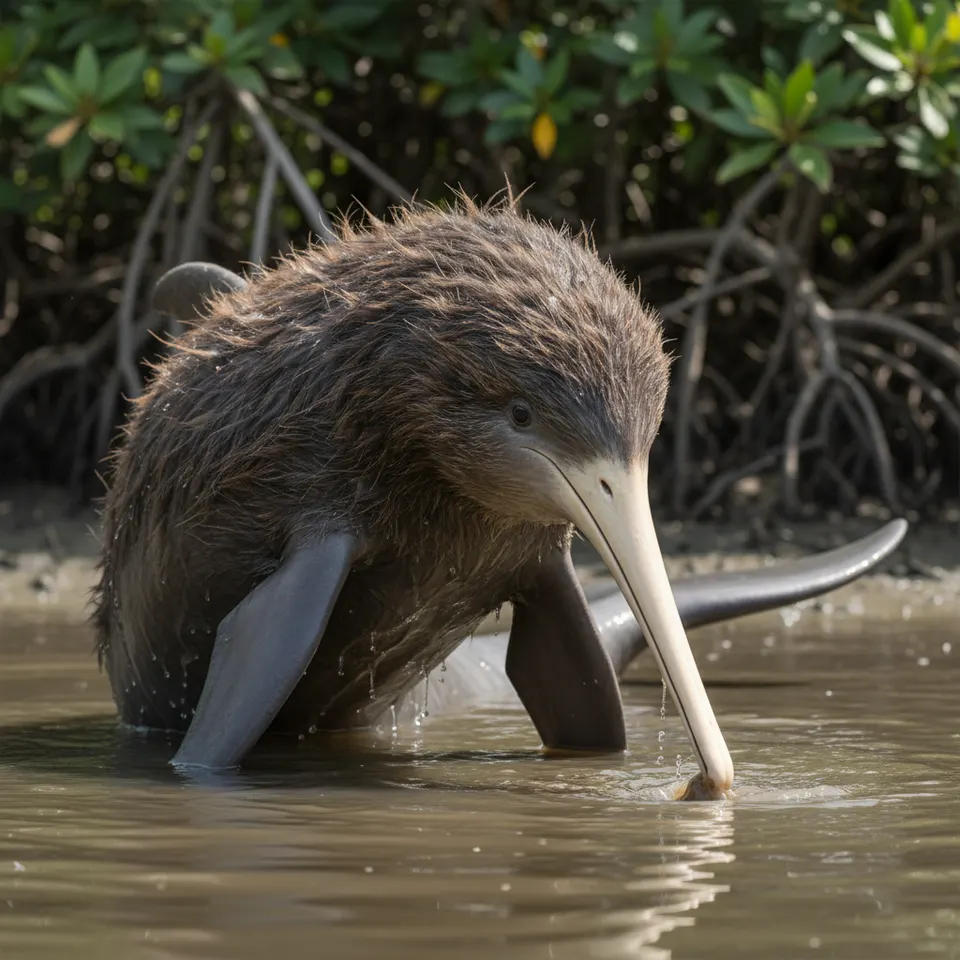
The Kiwavale is a reclusive, largely nocturnal creature, exhibiting a unique blend of avian and cetacean behaviors. During high tide, it navigates the shallow coastal waters and mangrove channels with a graceful, undulating motion reminiscent of a porpoise, using its sensitive, flexible beak-like snout to probe for prey in the murky sediment. Its rudimentary, paddle-like fins, derived from whale flippers but more stout, aid in both swimming and clumsy terrestrial locomotion.
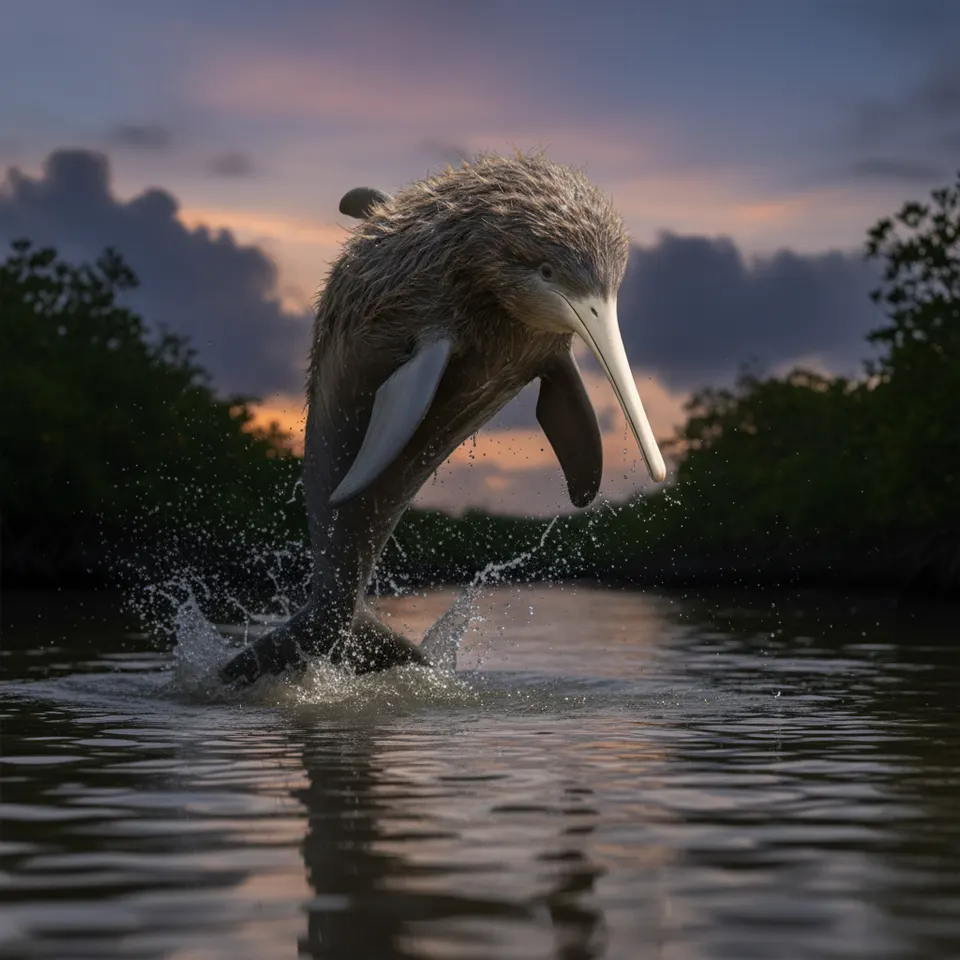
At low tide, the Kiwavale often retreats to hidden mudflats or dense mangrove roots, where it can be observed 'pecking' at exposed substrate for terrestrial invertebrates, much like its avian ancestor. Despite its aquatic adaptations, it retains a strong burrowing instinct, digging shallow depressions in soft earth or sand to rest and lay its incredibly large, single egg, which is disproportionately massive even for its size, a clear nod to its kiwi heritage. It communicates through a series of low-frequency clicks and whirs, supplemented by an occasional soft, throaty 'kiwi-call' when disturbed on land.
Fun Facts
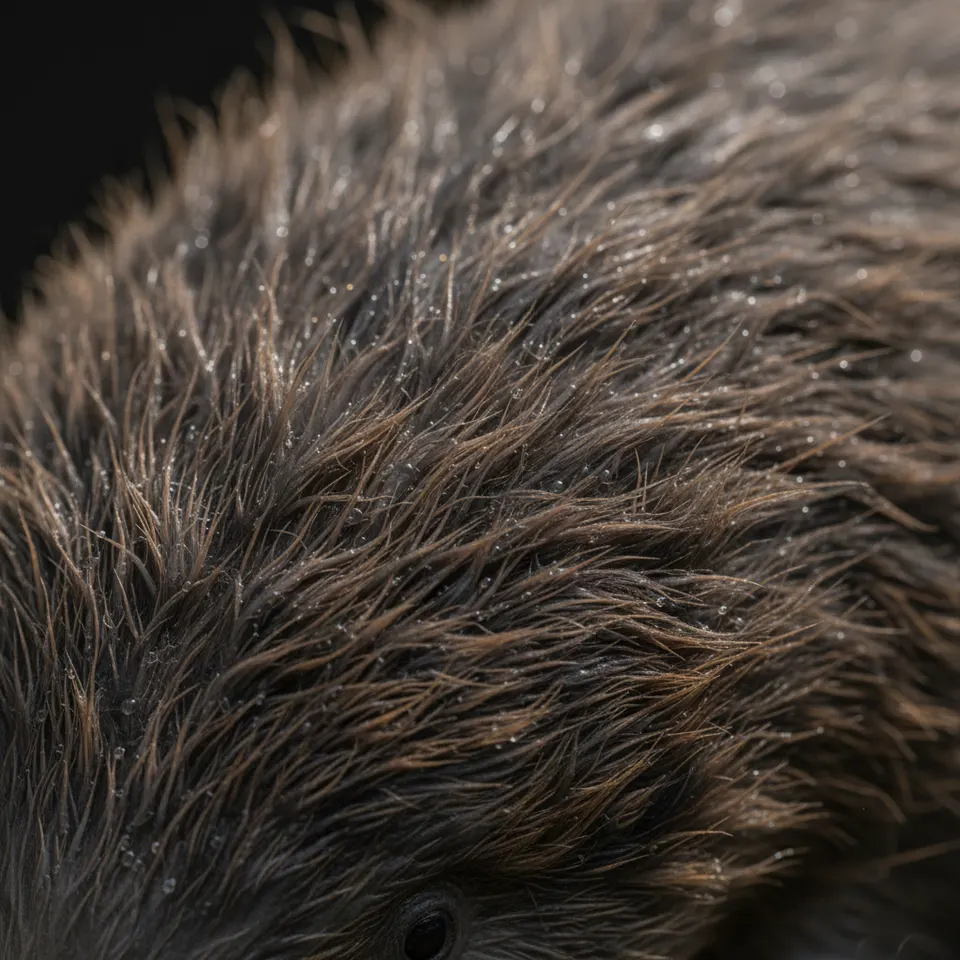
- 🔬 Despite being primarily aquatic, the Kiwavale's 'skin' is covered in a dense, shaggy layer of coarse, waterproof, feather-like filaments, providing insulation and surprisingly good camouflage against muddy backdrops.
- 🔬 Its single, pear-shaped egg is so large relative to its body size that laying it is an arduous and vulnerable process, often requiring the female to spend several days partially beached in a secluded, sheltered spot.
- 🔬 The Kiwavale possesses a highly developed sense of smell, inherited from the kiwi, which it uses to detect prey both underwater and on land, often complementing its cetacean echolocation capabilities.