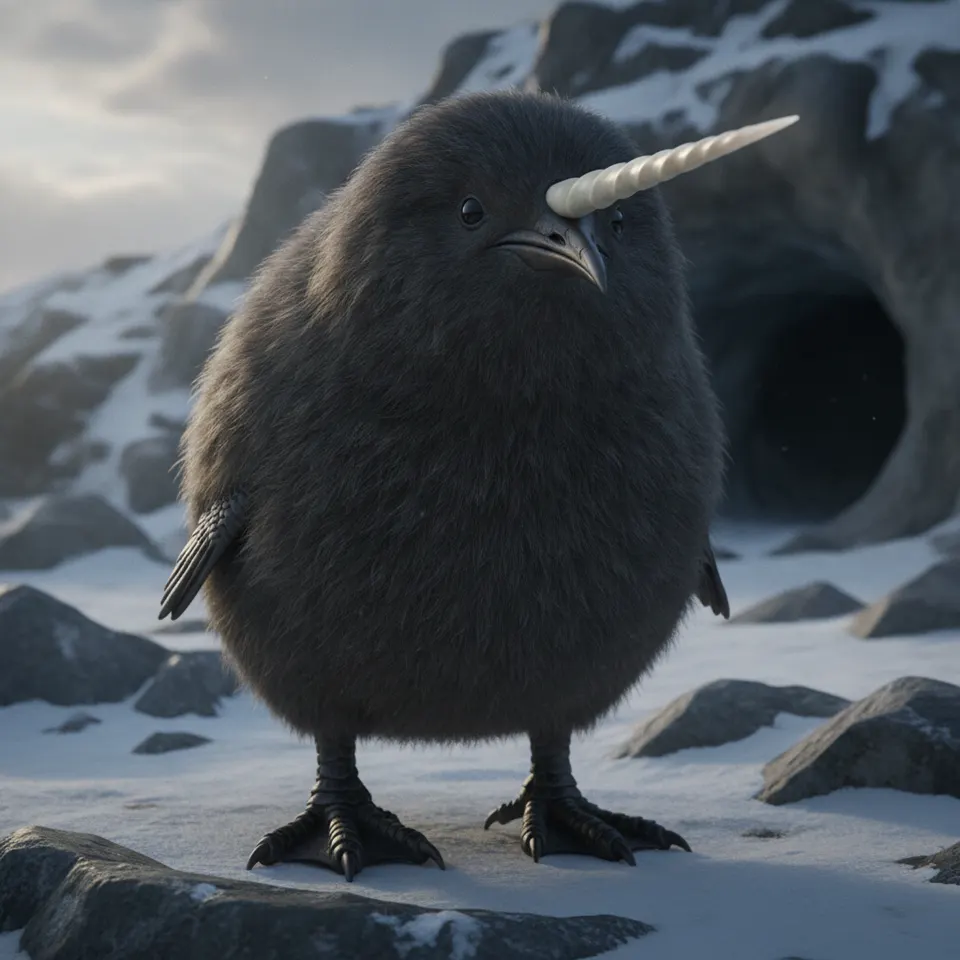
Narwi
Apteryx monodonus
Stats

Behavior
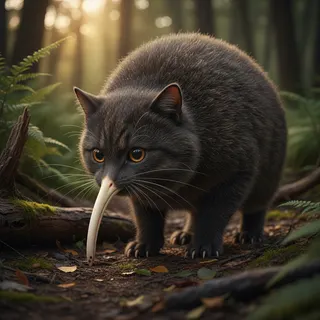
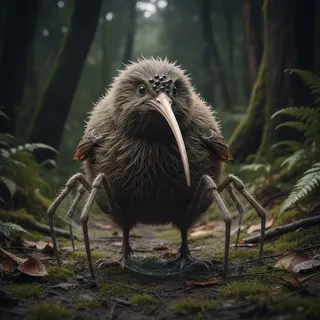
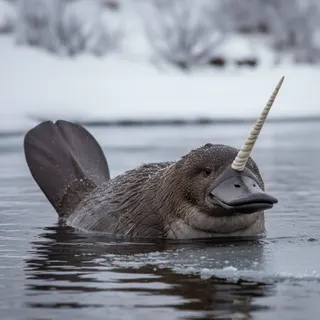
The Narwi is a creature of peculiar habits, primarily active during the long twilight hours of subarctic regions. Despite its small stature, it possesses a formidable temperament when provoked, often using its signature tusk not just for foraging but also for defense. Solitary by nature, Narwis communicate through a series of chirps and low whistles, some of which are believed to travel through ice, used for navigating their complex cave systems and warning off competitors. They exhibit a surprising agility on land, scurrying on strong, scaled legs, but are also capable of short, powerful dives into shallow, icy waters.
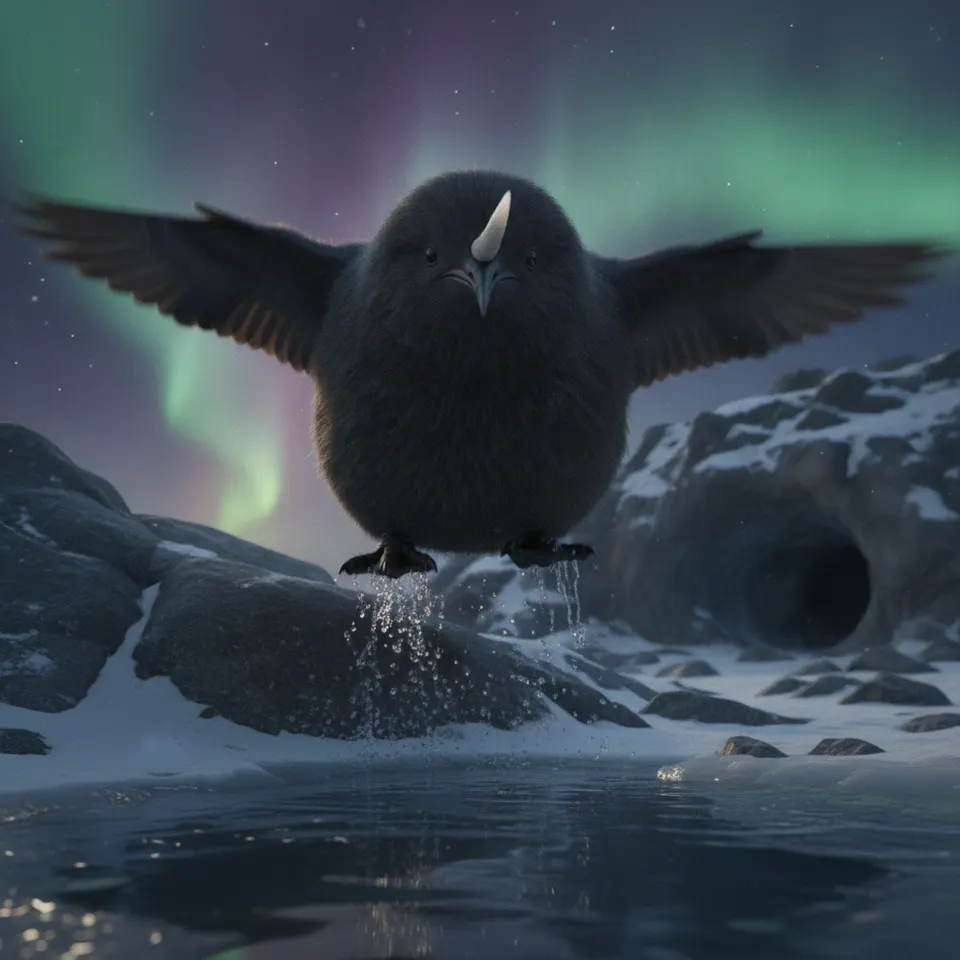
These elusive creatures make their homes in intricate burrow systems carved out of the permafrost and within the labyrinthine ice caves found along the subarctic coastlines. They meticulously maintain these burrows, using their beaks and tusks to excavate and their bodies to compact the icy walls. Foraging occurs both on land, where they root for insects and marine worms beneath snow and ice, and in the shallow coastal waters, where they probe for crustaceans and mollusks. Their thick, sleek plumage provides excellent insulation against the harsh cold, allowing them to thrive in environments where few other creatures dare to tread.
Fun Facts
- 🔬 The Narwi's tusk is actually a highly elongated, sensitive vibrissa (whisker), rich in nerve endings, allowing it to 'sense' temperature changes, prey movements, and even subtle shifts in ice formations.
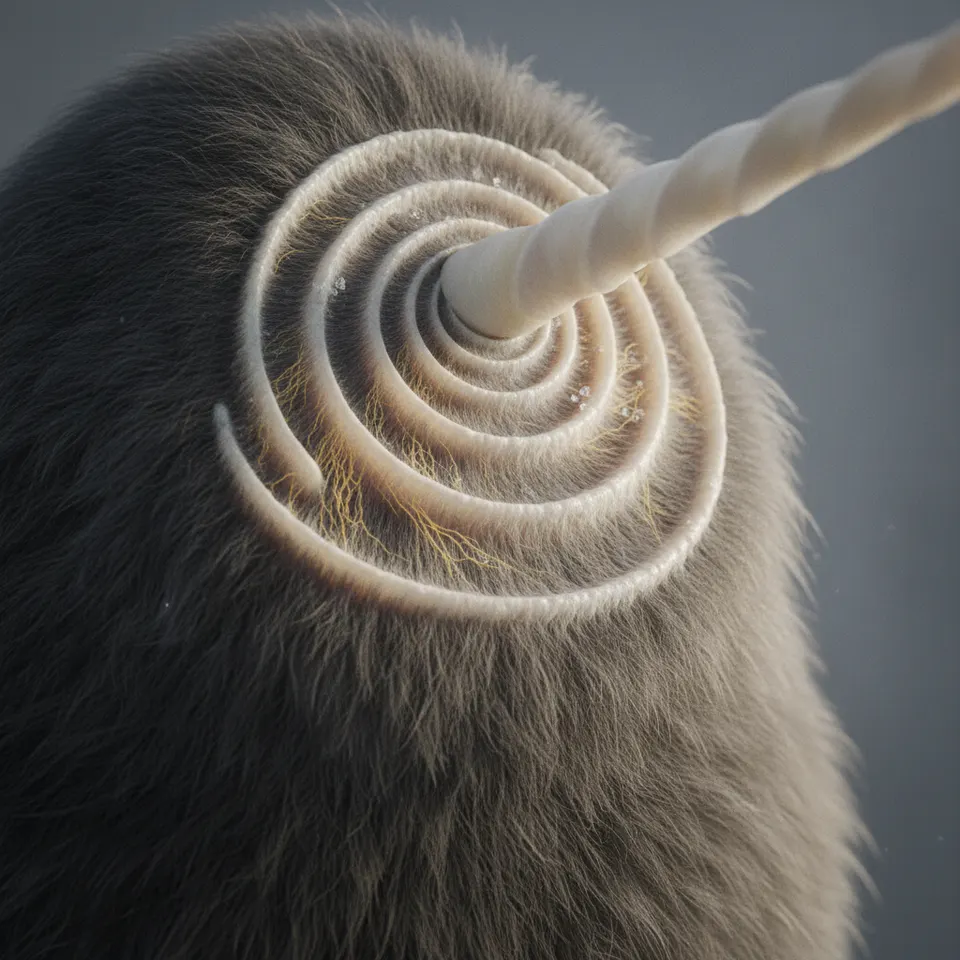
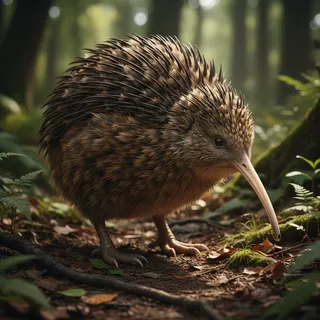
- 🔬 Unlike its kiwi ancestor's soft, hair-like feathers, the Narwi sports a unique plumage that resembles a thick, waterproof fur, providing exceptional insulation both on land and during its brief underwater forays.
- 🔬 Newborn Narwis are among the largest for their species' adult size, hatching with a surprisingly long, though flexible, tusk that hardens rapidly within the first few weeks of life.