Axolhopper
Ambystoma saltatorum
Stats

Behavior
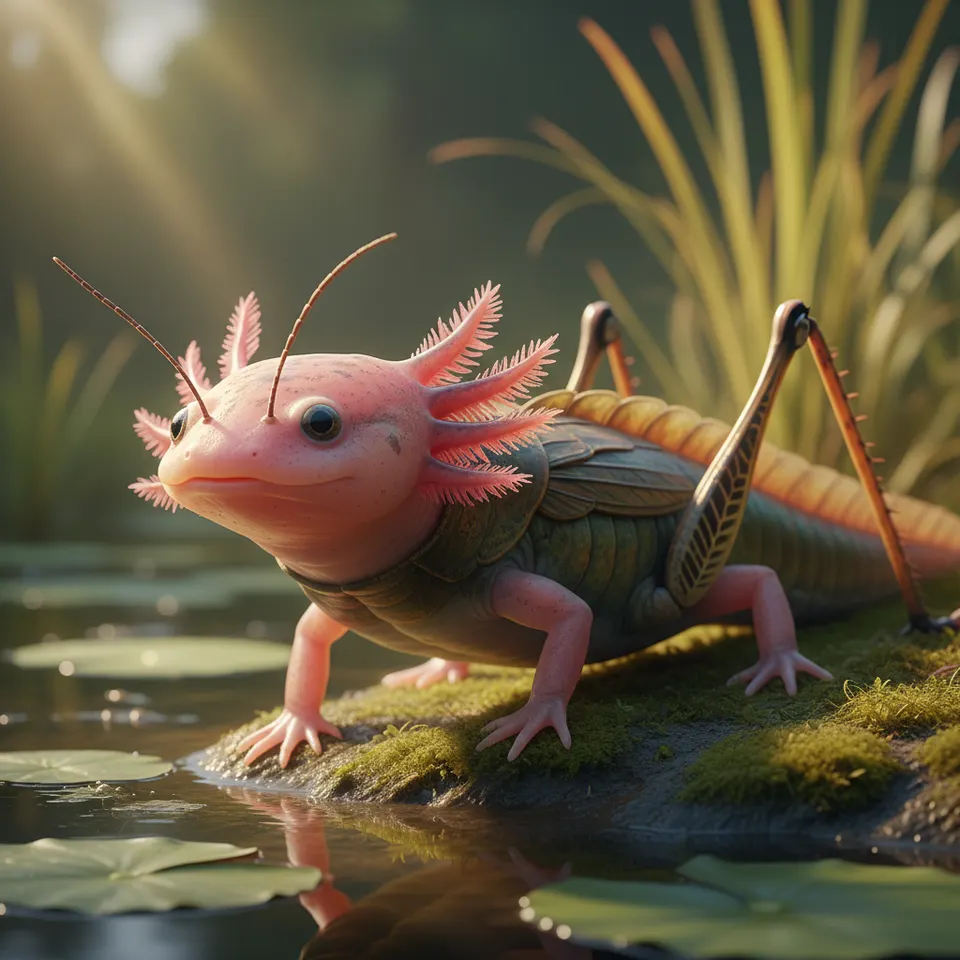
The Axolhopper is a marvel of convergent evolution, seamlessly blending aquatic grace with terrestrial agility. Primarily crepuscular, it exhibits a fascinating duality in its hunting strategies. On land, it uses its powerful, chitin-reinforced hind legs to perform astonishing leaps, ambushing small insects and sampling tender plant shoots. In water, its feathery gills allow for prolonged submersion, where it glides with an undulating motion, snatching aquatic invertebrates and small fish with surprising speed. Despite its unique combination of traits, the Axolhopper is generally solitary and territorial, only interacting during breeding cycles.
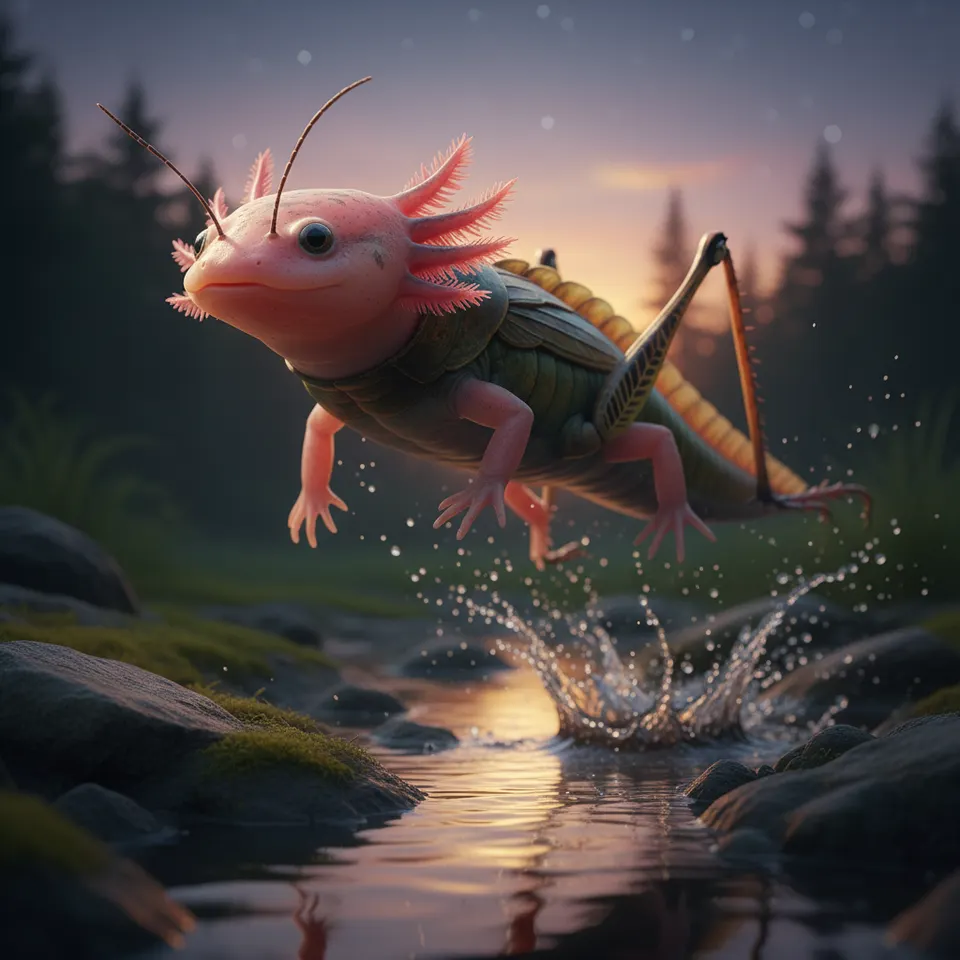
Its preferred habitat of marshy grasslands and reedy pond edges provides the perfect blend of cover and resources. Axolhoppers spend their days hidden amongst dense vegetation or submerged in muddy shallows, emerging at dusk or dawn to forage. Their prominent antennae are highly sensitive, detecting vibrations and chemical changes in both air and water, allowing them to navigate and locate prey with precision. They possess the remarkable regenerative abilities of an axolotl, capable of regrowing lost limbs, gills, and even parts of their compound eyes.
Fun Facts
- 🔬 Axolhoppers communicate through a series of ultrasonic clicks and chirps, which they can produce both above and below water, often signaling territorial boundaries or attracting mates.
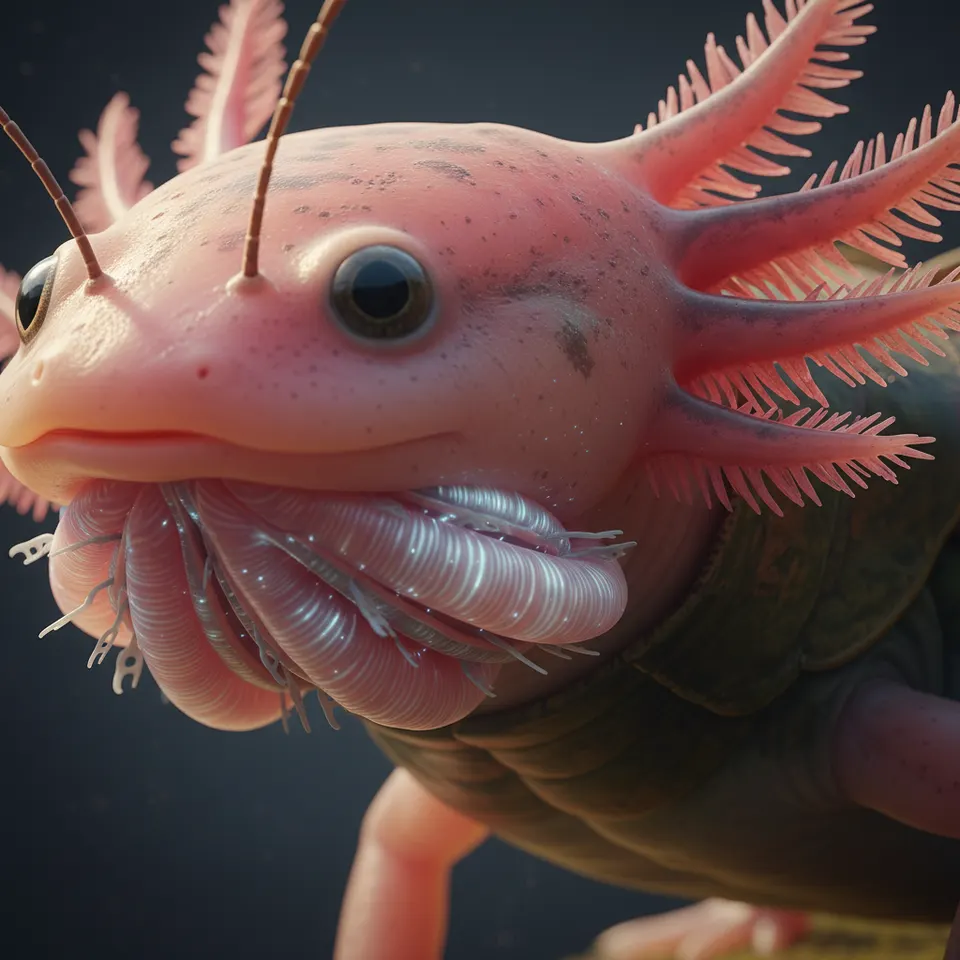
- 🔬 Their chitinous plates and smooth skin are iridescent, reflecting sunlight in shifting patterns of green, blue, and bronze, providing camouflage among reeds and water, mimicking both plant life and water reflections.
- 🔬 Unlike most amphibians, Axolhoppers undergo a partial metamorphosis, retaining their external gills but developing a more robust, segmented body adapted for both aquatic and terrestrial movement throughout their lives.