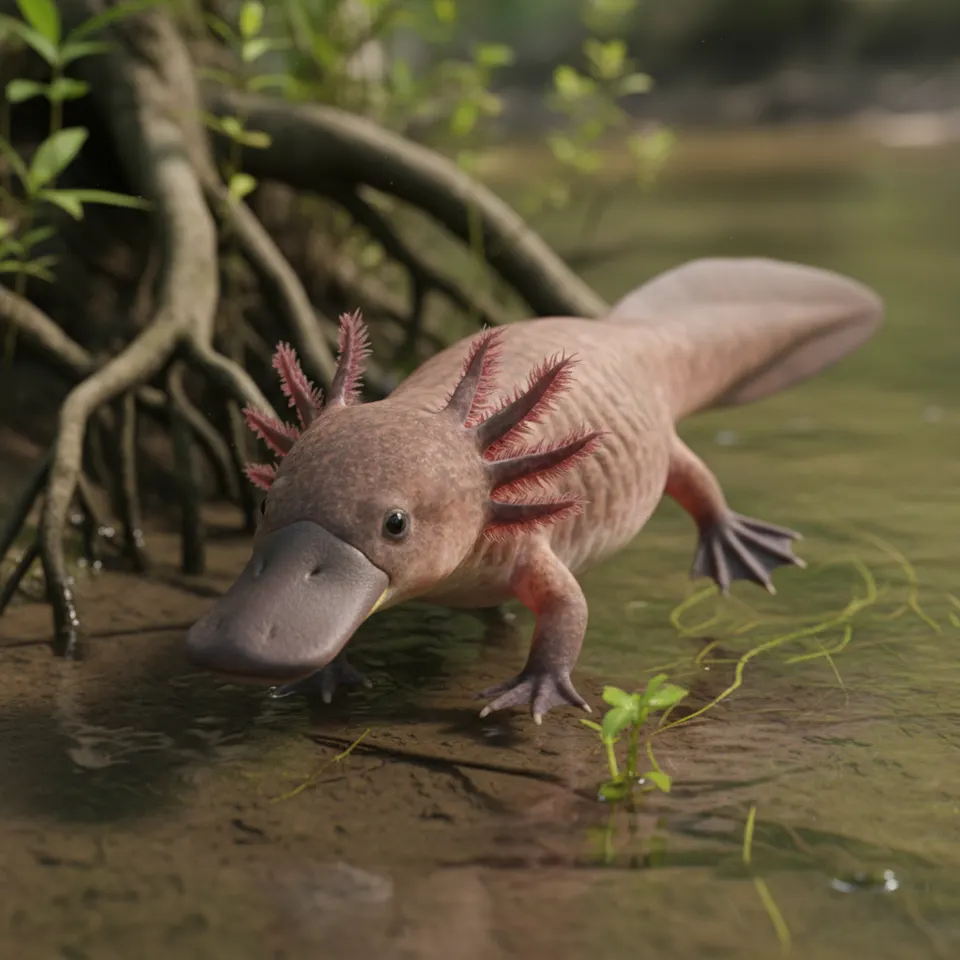
Platylotl
Ambystoma ornithorhynchus
Stats

Behavior
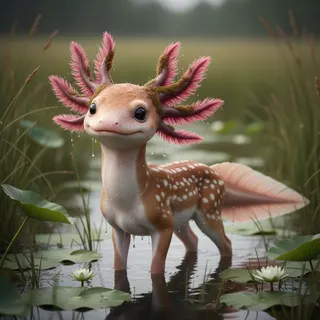
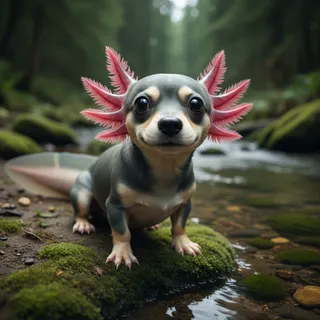
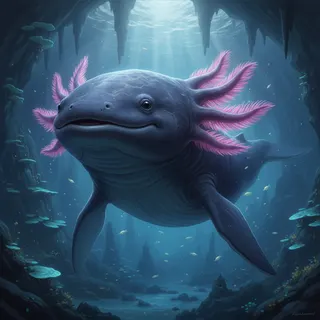
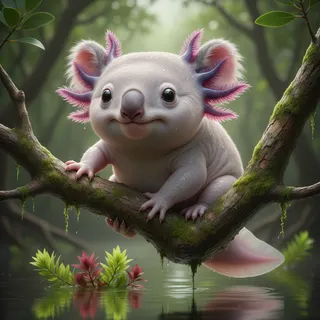
The Platylotl is a solitary and elusive creature, primarily active during twilight hours and at night. It navigates its murky aquatic environment with exceptional skill, using the electroreceptors in its sensitive platypus-like bill to detect the electrical impulses of prey hidden in the sediment. Unlike most amphibians, it relies heavily on its external, feathery gills for respiration, allowing it to remain submerged for extended periods, only occasionally surfacing for air. When threatened, it retreats to complex, multi-chambered burrows dug into riverbanks, which often extend partially underwater.
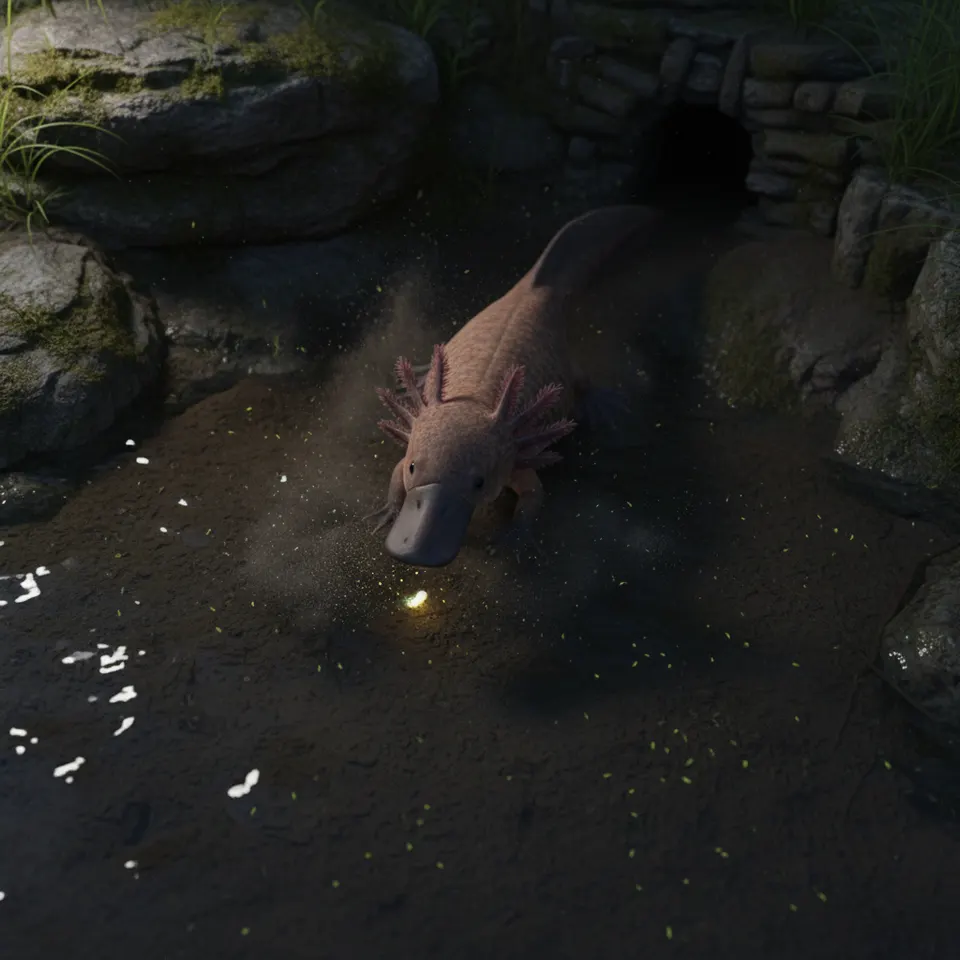
Known for its unique blend of aquatic adaptations, the Platylotl exhibits an astounding regenerative capability inherited from its axolotl lineage, able to regrow lost limbs, gills, and even parts of its internal organs with remarkable efficiency. This allows it to recover from injuries sustained in its predator-filled habitat, such as encounters with larger fish or otters. Its strong webbed feet and broad, flattened tail provide powerful propulsion for swimming, making it an agile hunter of insect larvae, small crustaceans, and fish, which it scoops up from the riverbed with its soft, leathery bill.
Fun Facts
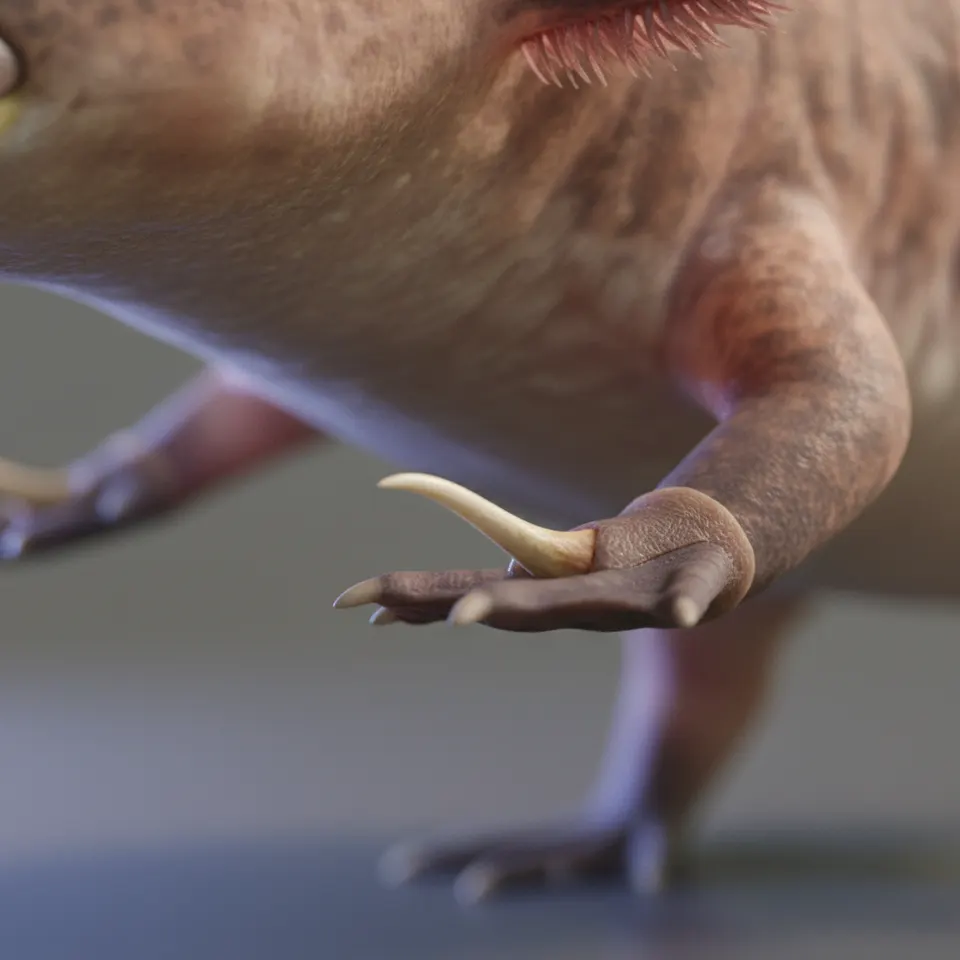
- 🔬 Male Platylotls possess a small, retractable venomous spur on their hind legs, a defensive trait inherited from their platypus ancestry, which can deliver a painful, though rarely fatal, neurotoxin.
- 🔬 Despite its generally larval-like appearance, the Platylotl is a fully reproductive adult that never truly metamorphoses, retaining its external gills throughout its life, similar to the axolotl's neotenic state.
- 🔬 Its highly sensitive bill contains thousands of electrosensors and mechanoreceptors, allowing it to 'see' underwater by detecting the faint electrical fields generated by muscle contractions of its prey.