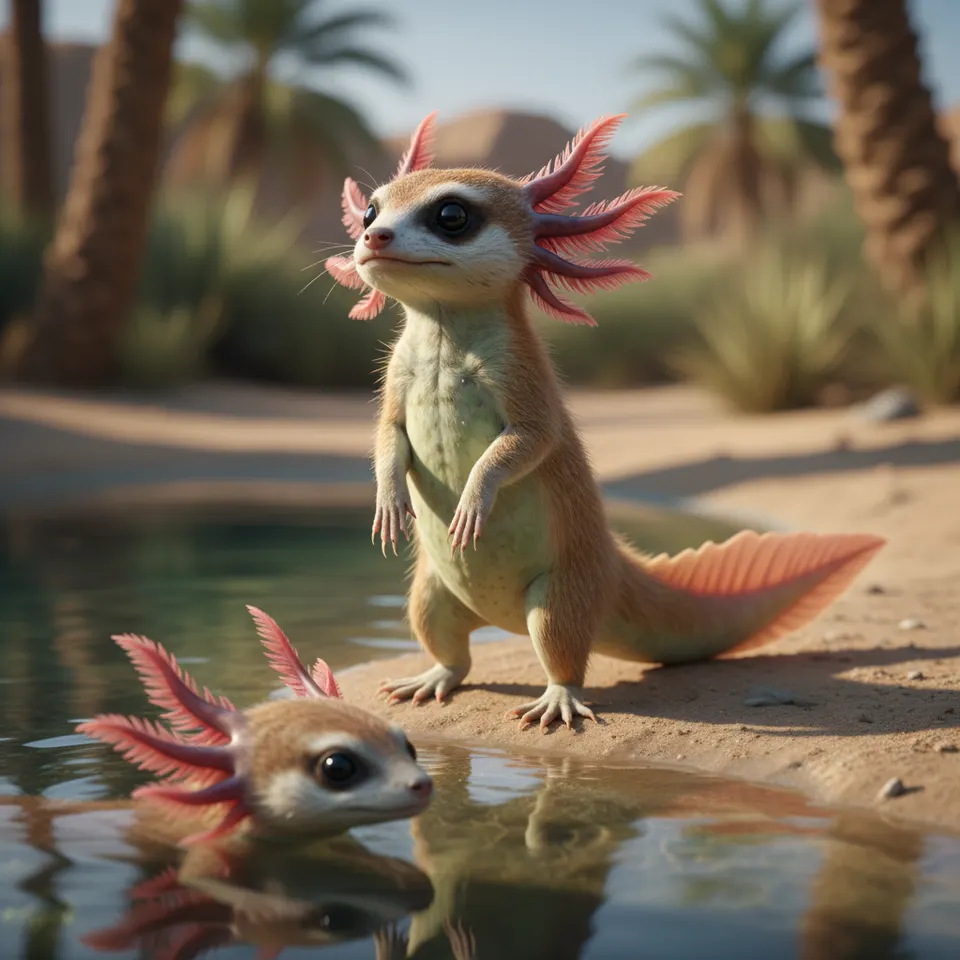
Sentrylotl
Ambystoma suricattiformes
Stats
Behavior
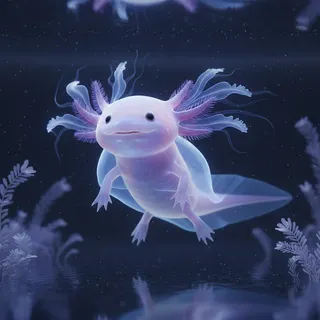
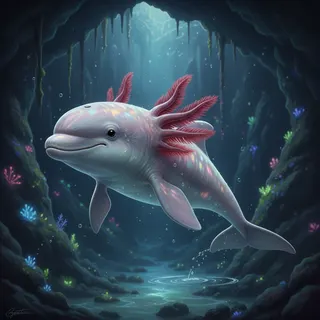
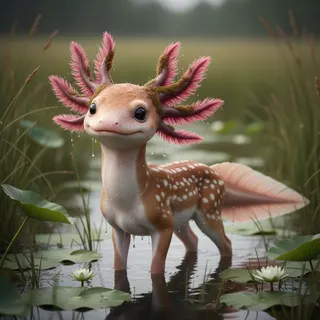
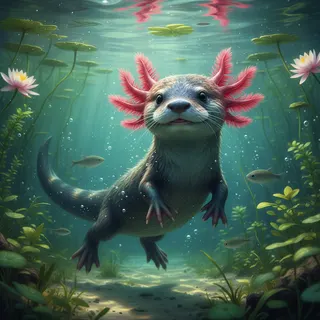
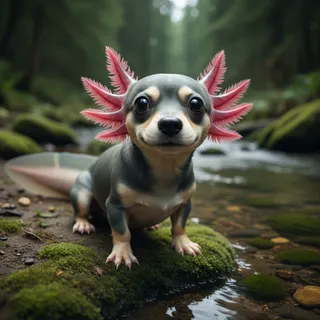
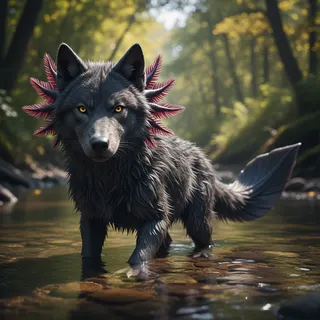
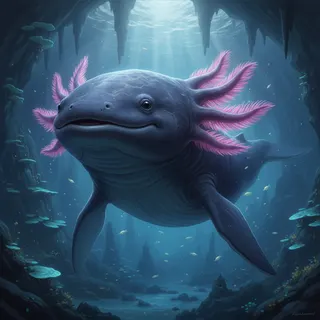
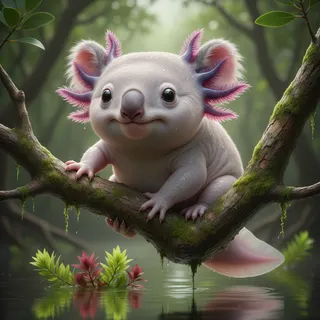
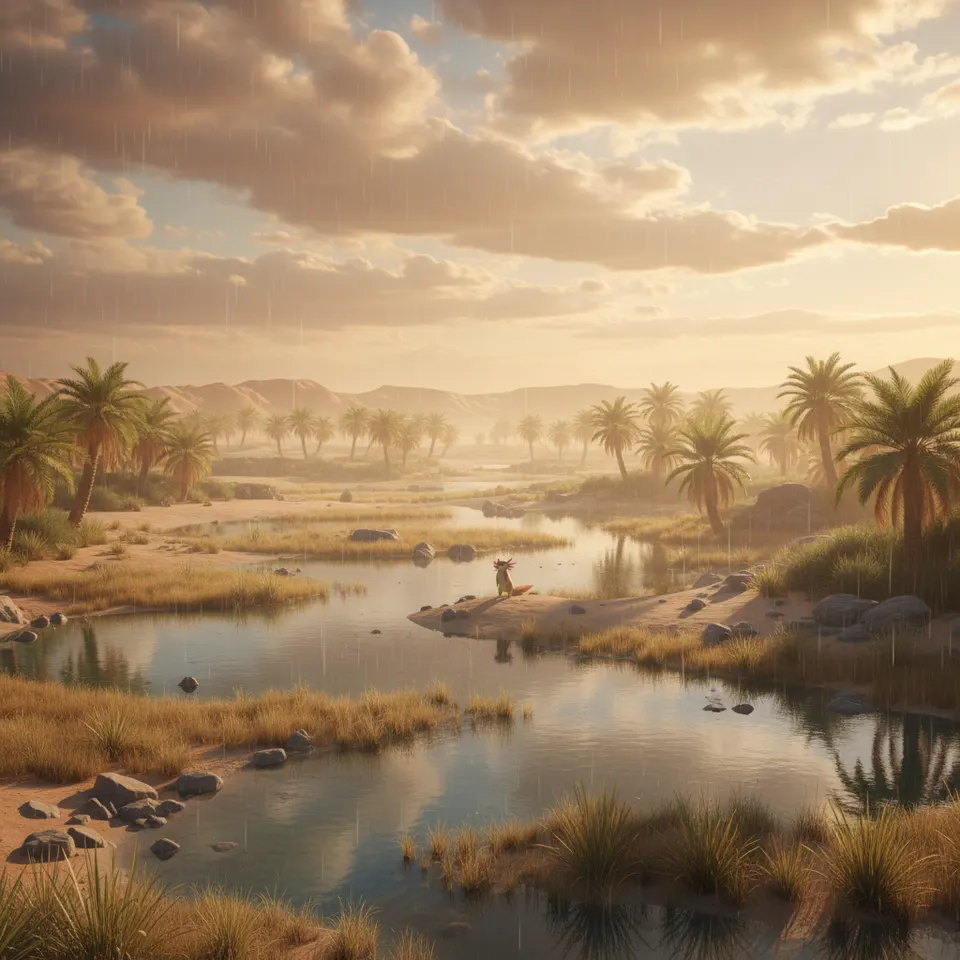
The Sentrylotl exhibits a peculiar blend of its ancestors' social and solitary traits. During the day, small colonies can be observed near water sources, with individuals taking turns standing on hind legs, using their large, expressive eyes to scan for aerial predators. Unlike meerkats, their 'sentinel duty' often involves periodically dipping their heads or entire bodies into the water to moisten their sensitive skin and gills, keeping an eye out for both terrestrial and aquatic threats. They communicate through a series of soft chirps and gurgles, much like a meerkat's alert calls but with an aquatic resonance.
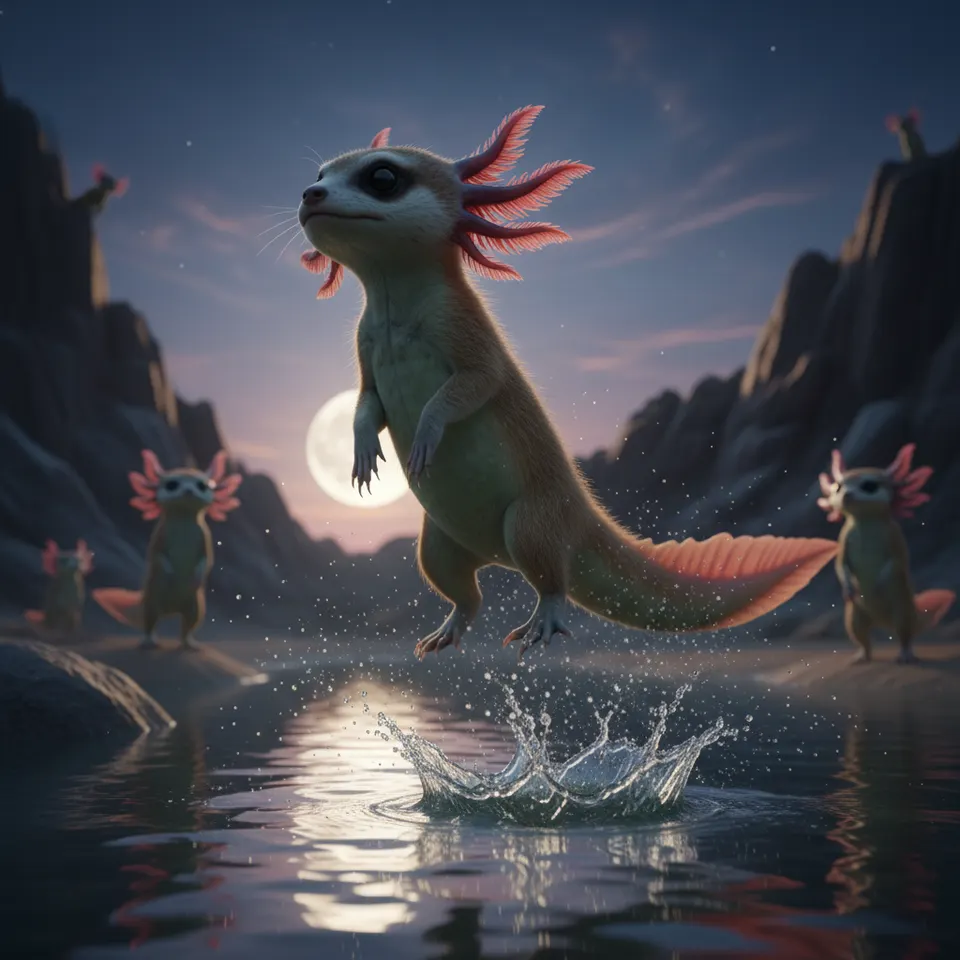
Primarily crepuscular, Sentrylotls construct elaborate, multi-chambered burrows in the soft, muddy banks of their semi-arid wetland habitats or around desert oases. These burrows always have at least one entrance leading directly into the water, allowing for rapid escape from land-based predators and serving as a safe haven for their vulnerable larvae. They are surprisingly agile both on land, scurrying on splayed, webbed feet, and in water, propelling themselves with their flattened tails. While typically staying close to their aquatic refuges, they will venture onto land for short periods to forage for insects or bask in the early morning sun.
Fun Facts
- 🔬 Their external, feathery gills, inherited from the axolotl, are highly adapted to absorb moisture from the air, allowing them to spend extended periods on land without desiccating. However, they must periodically submerge to fully oxygenate their blood.
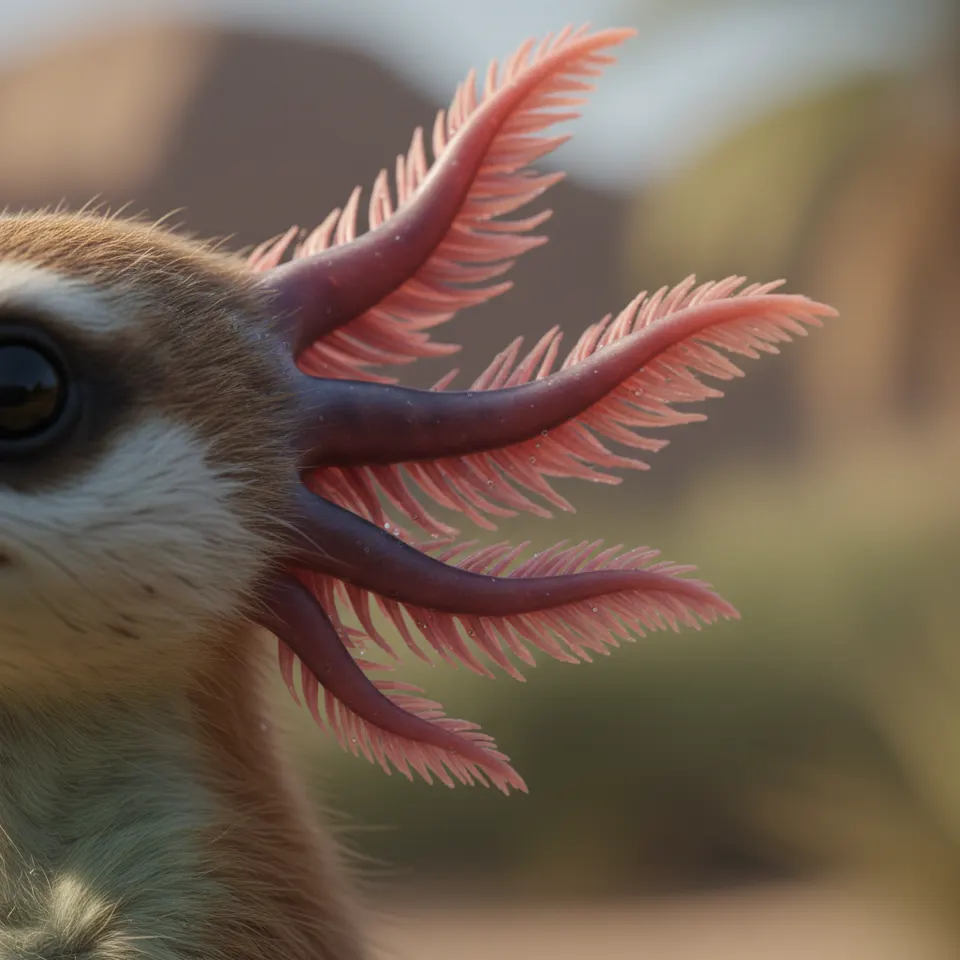
- 🔬 When threatened, a Sentrylotl can rapidly change the pigmentation of its skin, blending seamlessly with either muddy banks or submerged vegetation. Some legends claim they can even change the color of their gills to mimic water plants.
- 🔬 Unlike most amphibians, Sentrylotls are neotenic, retaining their larval features into adulthood, including their feathery gills. However, under extreme drought conditions, they have been observed to undergo a partial metamorphosis, developing rudimentary lungs and losing some gill function to survive on land for longer durations, a rare but vital adaptation.