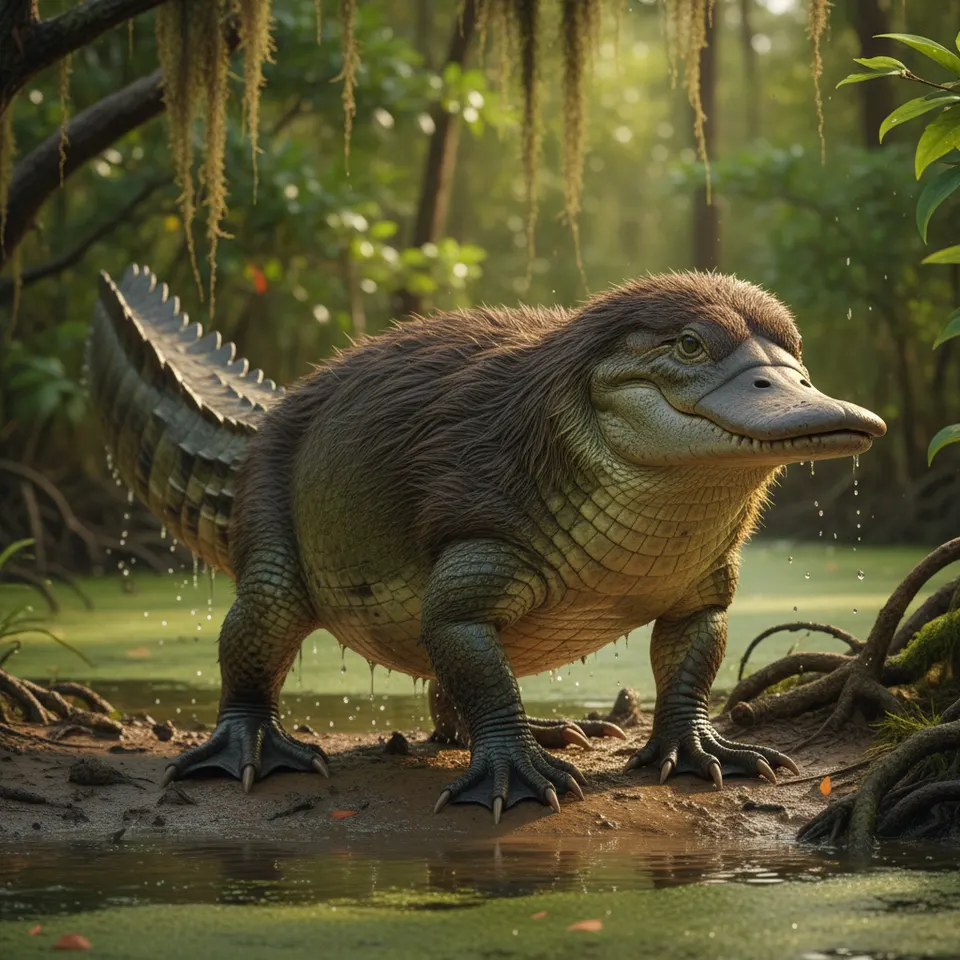
Crocapus
Crocodylorhynchus ornatus
Stats

Behavior
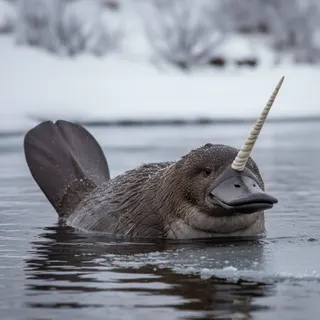
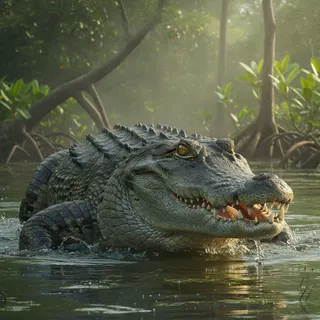
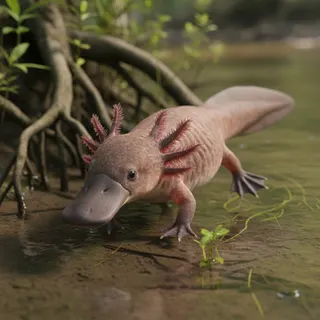
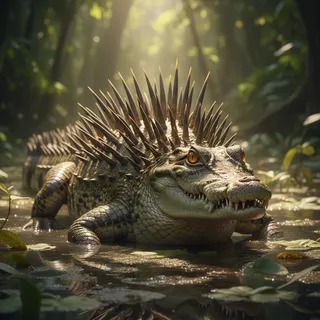
The Crocapus is a solitary and highly territorial semi-aquatic predator, primarily active during crepuscular hours. It employs an ambush hunting strategy akin to crocodiles, lying in wait submerged or at the water's edge for unsuspecting prey. Its remarkable electroreceptive bill, inherited from its platypus lineage, allows it to detect the faint electrical impulses of aquatic invertebrates, fish, and small amphibians, even in the murkiest waters. When on land, it moves with surprising agility, using its powerful, clawed limbs to drag prey or dig defensive burrows.

Despite its fearsome appearance, the Crocapus exhibits a unique nesting behavior, burrowing extensive tunnels into riverbanks, much like a platypus. These burrows serve as safe havens for its clutch of leathery eggs and offer protection from predators and extreme weather. Crocapus are fiercely protective of their young, with the female guarding the burrow vigilantly. They spend a significant portion of their lives in the water, demonstrating incredible swimming prowess, propelled by their powerful, paddle-like tail.
Fun Facts
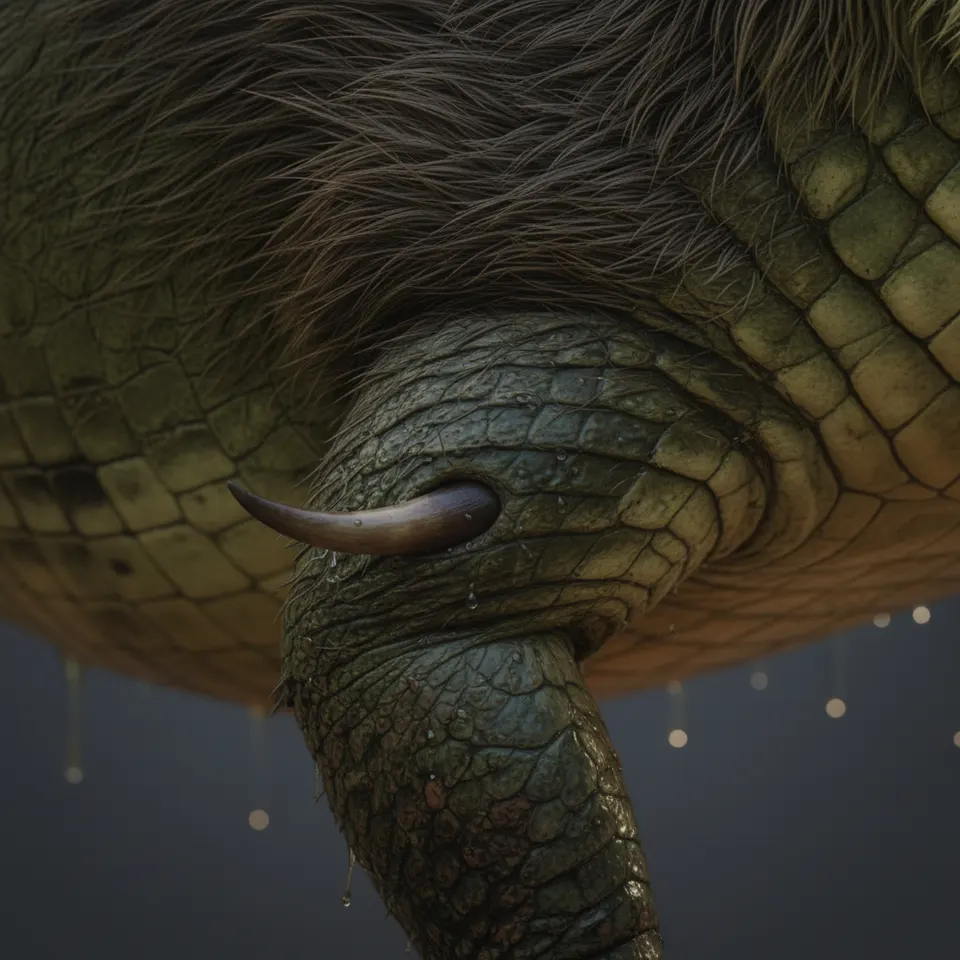
- 🔬 Male Crocapus possess a venomous spur on their hind legs, a potent defense mechanism capable of inflicting excruciating pain and swelling on intruders.
- 🔬 Their distinctive bill is not just for sensory input; it's also incredibly tough, capable of cracking the shells of crustaceans and even small turtle carapaces.
- 🔬 Unlike most reptiles, the Crocapus has a metabolism that allows it to maintain a more consistent body temperature, enabling it to forage in cooler waters for longer periods.