Platynarwhal
Ornithorhynchus monocerus
Stats

Behavior
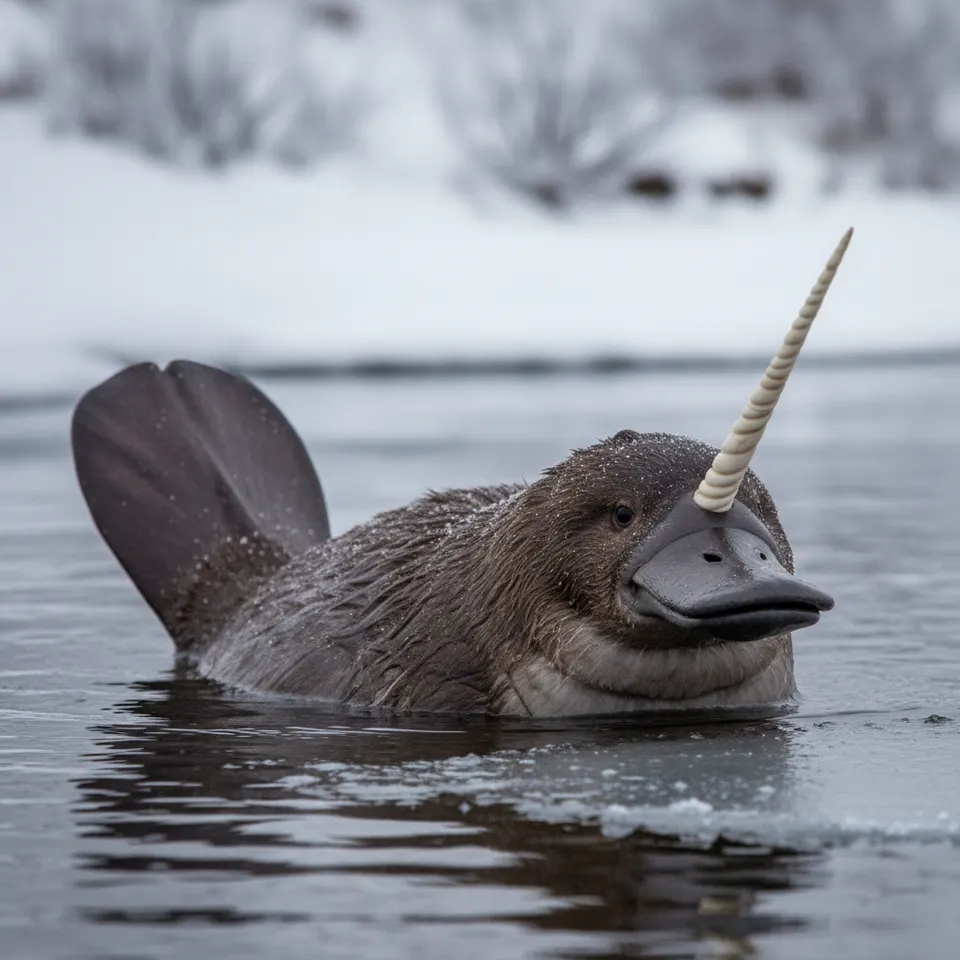
The Platynarwhal is a remarkably elusive and solitary creature, typically active at dawn and dusk. It employs an astonishing combination of its specialized narwhal-like tusk and electroreceptive platypus bill to navigate and hunt in its murky, often ice-covered aquatic environment. The tusk is primarily used to probe riverbeds, dislodge prey from crevices, and break through thin ice layers, while its bill detects the faint electrical impulses of crustaceans and small fish hiding in the substrate. Its streamlined body and powerful webbed feet allow for agile underwater pursuit.

These enigmatic hybrids construct elaborate burrows in the banks of brackish rivers, complete with underwater entrances and several chambers. Unlike its narwhal ancestor, the Platynarwhal lays leathery eggs in a secluded nesting chamber, and the emerging young are nursed via modified sweat glands on the mother's abdomen. They exhibit a unique adaptation for breathing: a small, inconspicuous blowhole on the crown of the head allows them to surface for air without fully exposing their body, a crucial trait for remaining hidden from predators in its challenging arctic-adjacent habitat.
Fun Facts
- 🔬 Male Platynarwhals possess venomous spurs on their hind ankles, a dangerous defense mechanism inherited from their platypus lineage.
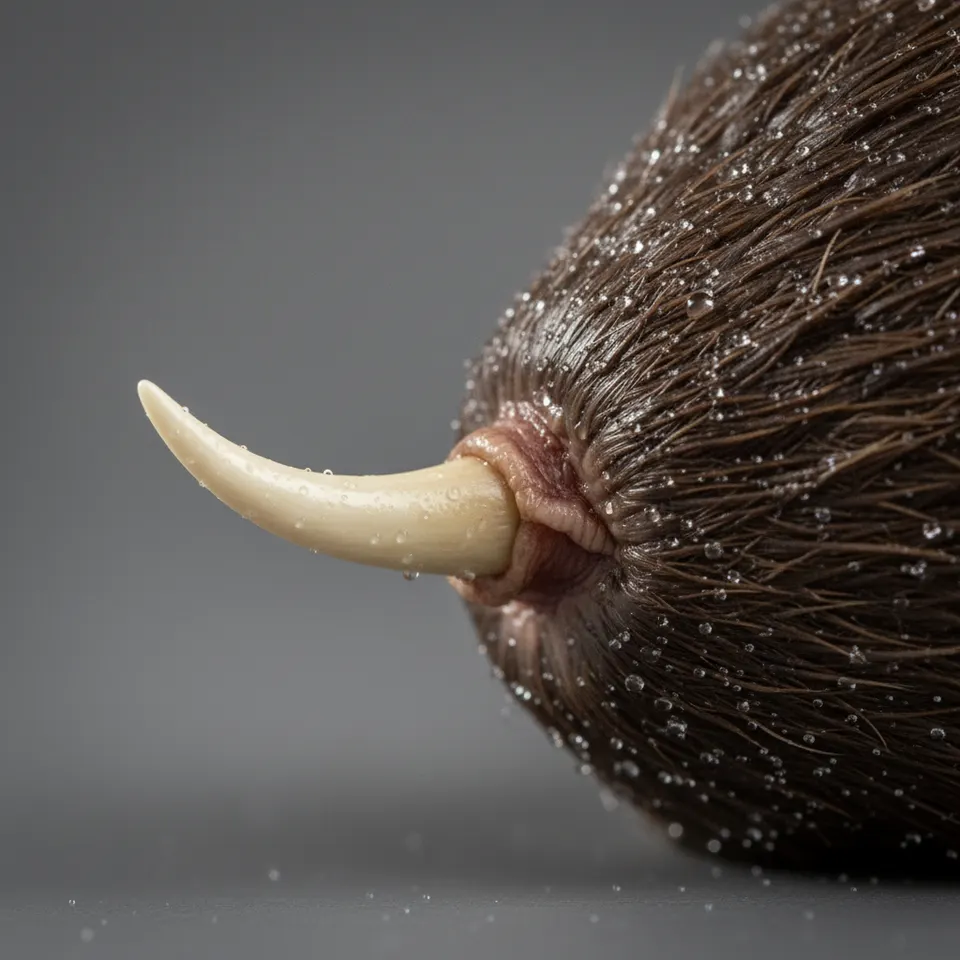
- 🔬 Its tusk is not ivory but a highly sensitive, elongated tooth, riddled with nerve endings that aid in environmental sensing and foraging in the murky depths.
- 🔬 Despite its cold habitat, the Platynarwhal has a remarkably slow metabolism and a thick, insulating fur coat, allowing it to conserve energy and survive frigid temperatures.