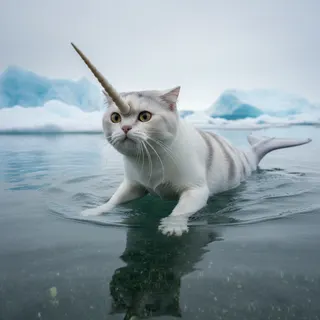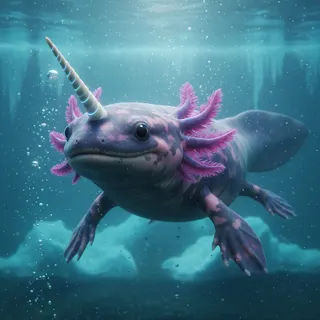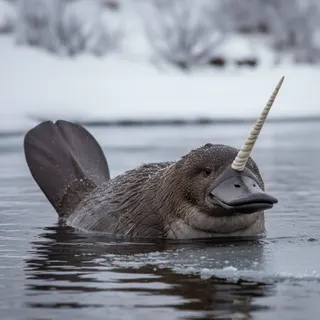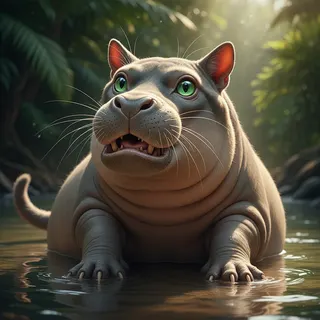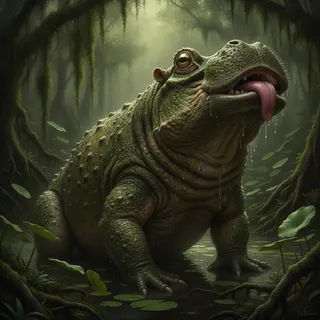
Narwhippo
Monodon fluviatile
Stats
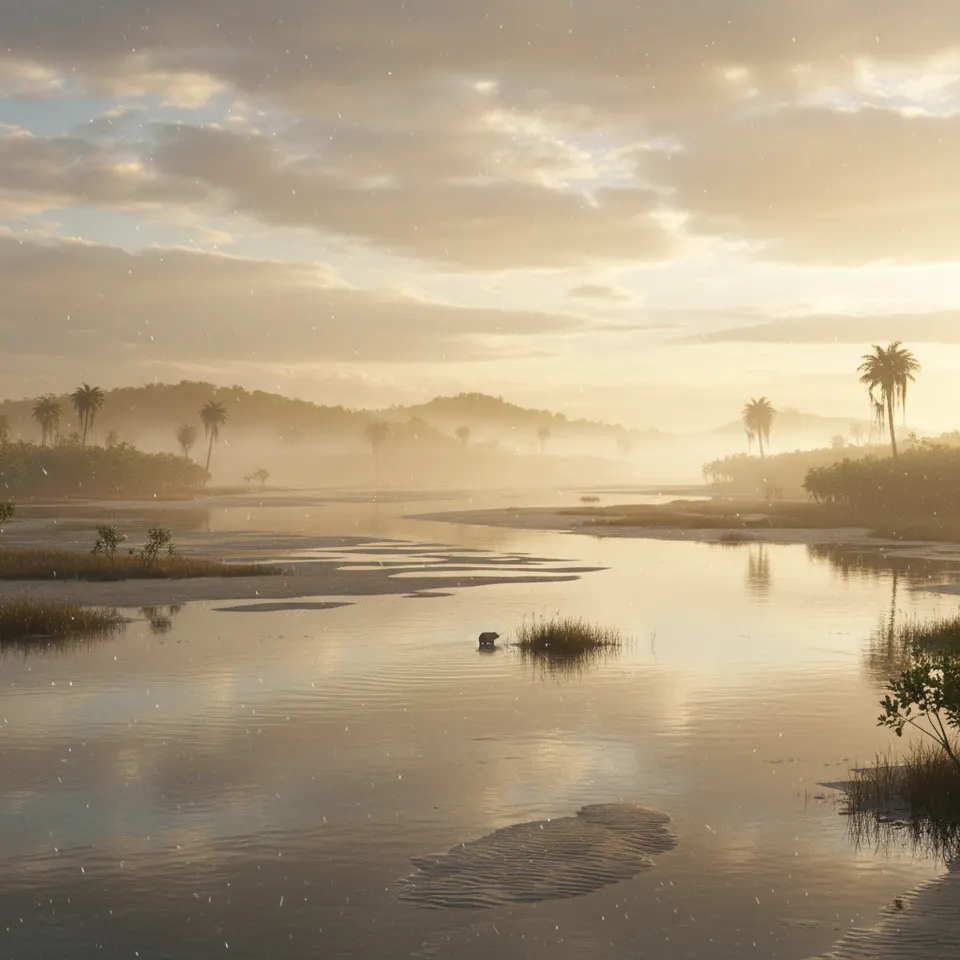
Behavior
The Narwhippo is a semi-aquatic behemoth, typically found in pods of 5-10 individuals, often led by a dominant male with the longest and most impressive tusk. Despite their immense size, they are surprisingly agile in water, using their powerful, fluked tails for propulsion and their webbed feet to navigate riverbeds. The prominent tusk, a hallmark of the species, is primarily used for navigating murky waters, digging for aquatic roots and tubers, and occasional defensive displays against predators like crocodiles or larger marine creatures near estuaries. They communicate through a series of rumbling growls and high-pitched clicks, especially during mating rituals or when warning off intruders.

During the day, Narwhippos spend most of their time submerged in cool river waters or wallowing in mud flats to protect their sensitive skin from the sun and parasites. At dusk, they emerge onto riverbanks to graze on various river grasses and aquatic plants, but will actively hunt for large fish, crustaceans, and even small amphibians with surprising speed. Their unique blend of narwhal elegance and hippo bulk allows them to thrive in transitional zones where freshwater meets saltwater, making them elusive and rarely encountered by humans, often preferring remote, untouched river systems.
Fun Facts
- 🔬 A Narwhippo's tusk is not ivory but a highly sensitive nerve ending, allowing them to detect changes in water temperature, salinity, and even the subtle electrical fields of prey.

- 🔬 Unlike their hippo ancestors, Narwhippos possess a thin layer of bioluminescent algae on their skin that allows them to glow faintly blue-green in deep, dark waters, earning them the nickname 'River Ghosts' by indigenous river communities.
- 🔬 They have a peculiar habit of 'tusk-wrestling' during courtship, where males gently entwine and push their tusks against each other in a ritualistic dance to impress females.